Nouveauté
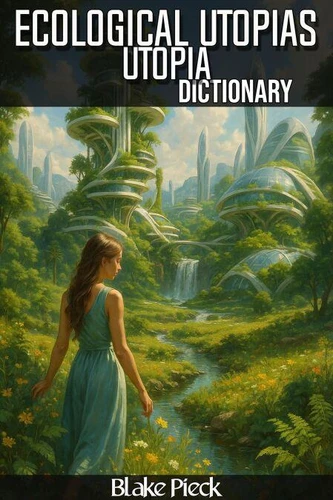
Utopia - Ecological Utopias Dictionary. Grow Your Vocabulary
Par :Formats :
Disponible dans votre compte client Decitre ou Furet du Nord dès validation de votre commande. Le format ePub est :
- Compatible avec une lecture sur My Vivlio (smartphone, tablette, ordinateur)
- Compatible avec une lecture sur liseuses Vivlio
- Pour les liseuses autres que Vivlio, vous devez utiliser le logiciel Adobe Digital Edition. Non compatible avec la lecture sur les liseuses Kindle, Remarkable et Sony
 , qui est-ce ?
Notre partenaire de plateforme de lecture numérique où vous retrouverez l'ensemble de vos ebooks gratuitement
Pour en savoir plus sur nos ebooks, consultez notre aide en ligne ici
C'est si simple ! Lisez votre ebook avec l'app Vivlio sur votre tablette, mobile ou ordinateur :

- FormatePub
- ISBN8231550845
- EAN9798231550845
- Date de parution19/01/2026
- Protection num.pas de protection
- Infos supplémentairesepub
- ÉditeurWalzone Press
Résumé
Utopia - Ecological Utopias Dictionary is a dedicated reference work for creators who want to imagine futures where human civilization and the natural world thrive together. Instead of treating environmental care as a simple backdrop, this book places ecological balance at the very center of social, economic, and spiritual life. It looks closely at how settlements are built, how food is grown, how energy is produced, and how people think about their place within living systems.
The aim is to help you move beyond vague green scenery and design worlds where every detail reflects a deep commitment to the health of the planet. Inside, you will find organized entries on key concepts, practices, and institutions that define ecological utopias. Topics include regenerative agriculture, rewilded landscapes, forest cities, watershed based governance, community supported ecosystems, and fully renewable energy grids.
There are entries on seed commons, wildlife corridors, river rights, soil cultures, and forms of transport that minimize harm while still allowing rich human contact. Each concept is presented in clear terms, linked to real world ecological ideas, then developed into story ready tools that you can weave into your own settings. The focus stays on practical structures that can shape entire societies, not only on decorative details.
This dictionary is designed for writers, game designers, and worldbuilders who want their utopian worlds to feel hopeful yet grounded. It shows how everyday routines can look when environmental respect is not an afterthought, but a basic assumption. You will see how housing blends with terrain, how communities share responsibility for local habitats, and how technology supports healing rather than extraction.
Entries pay attention to governance and conflict as well, because even in ecological utopias there are disagreements about land use, species protection, and the limits of growth. The result is a toolbox for creating settings that feel both idealistic and believable. At the same time, the book treats ecological utopia as a moral and emotional project, not only a technical arrangement. Many entries explore how people relate to animals, plants, and landscapes when they are taught from childhood that other forms of life have value in their own right.
You are encouraged to think about rituals of gratitude, seasonal festivals, and mourning for damaged places that have been brought back from the brink. The dictionary also considers the memory of past crises, such as climate disasters or mass extinctions, and how those memories inform a culture built on humility and care. Notes on common clichés help you avoid shallow pastoral fantasies and guide you toward richer, more nuanced visions.
Utopia - Ecological Utopias Dictionary can support your creative process at any stage. You might use it early on to decide what kind of ecological foundation your world rests on, from island bioregions to planetary scale conservation networks. You can also consult individual entries while drafting, when you need a specific detail such as how a council might allocate water in a drought, how a city roofscape could double as habitat, or how children learn to read the signs of a healthy forest.
Whether your work follows gardeners, scientists, spiritual leaders, city planners, or families who simply live inside these systems, this book offers the concepts, vocabulary, and narrative hooks you need to bring ecological utopias to life with clarity, warmth, and depth.
The aim is to help you move beyond vague green scenery and design worlds where every detail reflects a deep commitment to the health of the planet. Inside, you will find organized entries on key concepts, practices, and institutions that define ecological utopias. Topics include regenerative agriculture, rewilded landscapes, forest cities, watershed based governance, community supported ecosystems, and fully renewable energy grids.
There are entries on seed commons, wildlife corridors, river rights, soil cultures, and forms of transport that minimize harm while still allowing rich human contact. Each concept is presented in clear terms, linked to real world ecological ideas, then developed into story ready tools that you can weave into your own settings. The focus stays on practical structures that can shape entire societies, not only on decorative details.
This dictionary is designed for writers, game designers, and worldbuilders who want their utopian worlds to feel hopeful yet grounded. It shows how everyday routines can look when environmental respect is not an afterthought, but a basic assumption. You will see how housing blends with terrain, how communities share responsibility for local habitats, and how technology supports healing rather than extraction.
Entries pay attention to governance and conflict as well, because even in ecological utopias there are disagreements about land use, species protection, and the limits of growth. The result is a toolbox for creating settings that feel both idealistic and believable. At the same time, the book treats ecological utopia as a moral and emotional project, not only a technical arrangement. Many entries explore how people relate to animals, plants, and landscapes when they are taught from childhood that other forms of life have value in their own right.
You are encouraged to think about rituals of gratitude, seasonal festivals, and mourning for damaged places that have been brought back from the brink. The dictionary also considers the memory of past crises, such as climate disasters or mass extinctions, and how those memories inform a culture built on humility and care. Notes on common clichés help you avoid shallow pastoral fantasies and guide you toward richer, more nuanced visions.
Utopia - Ecological Utopias Dictionary can support your creative process at any stage. You might use it early on to decide what kind of ecological foundation your world rests on, from island bioregions to planetary scale conservation networks. You can also consult individual entries while drafting, when you need a specific detail such as how a council might allocate water in a drought, how a city roofscape could double as habitat, or how children learn to read the signs of a healthy forest.
Whether your work follows gardeners, scientists, spiritual leaders, city planners, or families who simply live inside these systems, this book offers the concepts, vocabulary, and narrative hooks you need to bring ecological utopias to life with clarity, warmth, and depth.
A propos de Blake Pieck



17,49 €