Dernière sortie
Dystopia - Technological Control Dictionary
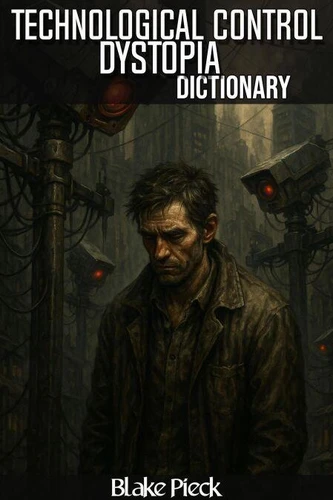
Technological Control Dictionary is a focused reference work for creators who want to understand how power can be enforced through circuits, software, and data rather than open force. Instead of treating technology as a neutral backdrop, this book places it at the heart of social and political control. It examines how devices, platforms, and infrastructure can be designed to guide choices, watch citizens, and shape reality itself.
The goal is to help you build settings where oppression does not always wear a uniform, because it is woven into the tools people cannot imagine living without. Inside, you will find organized entries on key systems, concepts, and practices that define technologically controlled societies. Topics include mass surveillance networks, biometric identification grids, social credit architectures, behavior scoring, automated censorship, predictive policing, and nudging strategies built into everyday interfaces.
Each entry explains how a particular mechanism works, which scientific or technical principles it relies on, and how it might realistically be deployed at scale. From city wide sensor webs to personalized recommendation engines that hide forbidden information, the book gives you practical building blocks you can adapt to any setting. This dictionary is designed for writers, game designers, and worldbuilders who want their worlds of technological control to feel coherent and grounded.
It shows how cameras, drones, smart homes, and wearable devices can create a dense web of observation that feels normal to those who live inside it. You will see how data passes through companies, ministries, and hidden agencies, how algorithms make decisions that no one person fully understands, and how user experience design gently steers people away from dissent. Entries pay close attention to the boring but essential layers of infrastructure, such as data centers, maintenance crews, corporate contracts, and legal frameworks that allow intrusive systems to appear lawful and helpful.
At the same time, the book treats technological control as an ethical and emotional crisis, not only as a technical puzzle. Many entries explore what it feels like to grow up with no expectation of privacy, to have friendships tracked and scored, or to discover that a travel permit or job application was denied by a system that cannot be questioned. You are encouraged to think about characters who trust the system, characters who work to maintain it, and characters who try to slip through its gaps.
Notes on common clichés help you avoid simple all seeing all knowing systems and instead guide you toward more realistic networks that are powerful, flawed, and dependent on human choices. Technological Control Dictionary can support your creative process from first idea to final draft. You might use it early on to decide what kinds of surveillance or algorithmic governance define your world, from gentle persuasion through personalized feeds to harsh enforcement through drone patrols and automated courts.
You can also consult individual entries while writing specific scenes, such as a protest monitored by facial recognition, a family struggling with a bad data record, or a technician quietly sabotaging a monitoring hub. Whether your story follows loyal engineers, uneasy citizens, investigative journalists, or underground hackers, this book offers concepts, vocabulary, and narrative hooks to bring technological control to life with clarity and depth.
The goal is to help you build settings where oppression does not always wear a uniform, because it is woven into the tools people cannot imagine living without. Inside, you will find organized entries on key systems, concepts, and practices that define technologically controlled societies. Topics include mass surveillance networks, biometric identification grids, social credit architectures, behavior scoring, automated censorship, predictive policing, and nudging strategies built into everyday interfaces.
Each entry explains how a particular mechanism works, which scientific or technical principles it relies on, and how it might realistically be deployed at scale. From city wide sensor webs to personalized recommendation engines that hide forbidden information, the book gives you practical building blocks you can adapt to any setting. This dictionary is designed for writers, game designers, and worldbuilders who want their worlds of technological control to feel coherent and grounded.
It shows how cameras, drones, smart homes, and wearable devices can create a dense web of observation that feels normal to those who live inside it. You will see how data passes through companies, ministries, and hidden agencies, how algorithms make decisions that no one person fully understands, and how user experience design gently steers people away from dissent. Entries pay close attention to the boring but essential layers of infrastructure, such as data centers, maintenance crews, corporate contracts, and legal frameworks that allow intrusive systems to appear lawful and helpful.
At the same time, the book treats technological control as an ethical and emotional crisis, not only as a technical puzzle. Many entries explore what it feels like to grow up with no expectation of privacy, to have friendships tracked and scored, or to discover that a travel permit or job application was denied by a system that cannot be questioned. You are encouraged to think about characters who trust the system, characters who work to maintain it, and characters who try to slip through its gaps.
Notes on common clichés help you avoid simple all seeing all knowing systems and instead guide you toward more realistic networks that are powerful, flawed, and dependent on human choices. Technological Control Dictionary can support your creative process from first idea to final draft. You might use it early on to decide what kinds of surveillance or algorithmic governance define your world, from gentle persuasion through personalized feeds to harsh enforcement through drone patrols and automated courts.
You can also consult individual entries while writing specific scenes, such as a protest monitored by facial recognition, a family struggling with a bad data record, or a technician quietly sabotaging a monitoring hub. Whether your story follows loyal engineers, uneasy citizens, investigative journalists, or underground hackers, this book offers concepts, vocabulary, and narrative hooks to bring technological control to life with clarity and depth.
Les livres de Blake Pieck








17,49 €