Nouveauté
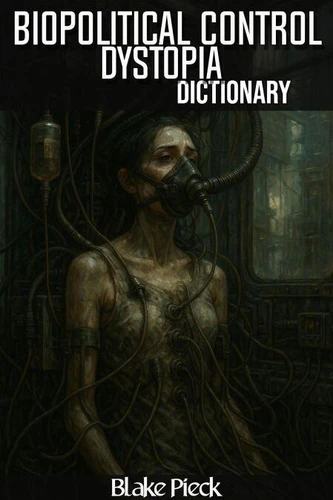
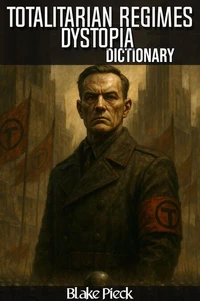
Dystopia – Biopolitical Control Dictionary. Grow Your Vocabulary
Par :Formats :
Disponible dans votre compte client Decitre ou Furet du Nord dès validation de votre commande. Le format ePub est :
- Compatible avec une lecture sur My Vivlio (smartphone, tablette, ordinateur)
- Compatible avec une lecture sur liseuses Vivlio
- Pour les liseuses autres que Vivlio, vous devez utiliser le logiciel Adobe Digital Edition. Non compatible avec la lecture sur les liseuses Kindle, Remarkable et Sony
 , qui est-ce ?
Notre partenaire de plateforme de lecture numérique où vous retrouverez l'ensemble de vos ebooks gratuitement
Pour en savoir plus sur nos ebooks, consultez notre aide en ligne ici
C'est si simple ! Lisez votre ebook avec l'app Vivlio sur votre tablette, mobile ou ordinateur :

- FormatePub
- ISBN8232716868
- EAN9798232716868
- Date de parution18/01/2026
- Protection num.pas de protection
- Infos supplémentairesepub
- ÉditeurDraft2Digital
Résumé
Closely at how states, corporations, and institutions use medicine, genetics, fertility, and health policy as instruments of power. It examines the quiet, technical, and often bureaucratic tools that decide who lives, who suffers, who may reproduce, and who is quietly written out of the future. The result is a resource that helps you see dystopia not only in towering walls and armed guards, but in hospital charts, medical scanners, and carefully worded regulations.
Inside, you will find carefully structured entries on key concepts, institutions, technologies, and narrative patterns that define biopolitical control. Topics include population management, genetic registration, reproductive licensing, state sponsored healthcare systems, mandatory implants, disease based surveillance, and the use of pharmaceuticals as social control. Each entry explains what the idea means in real world terms, how it can be transformed into a believable story element, and what ethical questions it raises for characters and societies.
Instead of offering vague clichés, the book gives you grounded, practical building blocks that you can combine into rich and coherent dystopian settings. The dictionary is designed for writers, game designers, roleplaying game masters, and worldbuilders who want their dystopias to feel disturbingly plausible. It shows you how to construct policies, institutions, and everyday routines that slowly strip people of autonomy while letting the system present itself as rational, scientific, or even compassionate.
You will see how vaccination campaigns, fertility programs, health scoring apps, and genetic risk profiles can be twisted into tools of sorting and exclusion. The entries also highlight the lived experience of characters inside such systems, from the fear of compulsory checkups to the quiet resistance of those who falsify records, hide pregnancies, or smuggle medicine. Throughout the book, biopolitical control is treated as more than a set of plot devices.
It is presented as a lens through which to examine questions of dignity, consent, and the value placed on different kinds of lives. Many entries include notes on common tropes, potential pitfalls, and ways to avoid reducing sensitive topics to simple shock value. By linking cold administrative measures to human consequences, the dictionary encourages stories that are intense and thought provoking rather than simply grim.
It invites you to ask what it means when a regime claims to protect the health of the population, and what is sacrificed in the name of that protection. Dystopia - Biopolitical Control Dictionary can be used as a planning tool at the start of a project or as a quick reference while you draft. You can browse by theme to inspire an entire setting built around reproductive regimes or medical segregation, or dip into single entries to sharpen a scene or a side character.
Whether you are designing a world where fertility is rationed, chronic illness is criminalized, or life extension is reserved for a chosen few, this book offers the vocabulary, concepts, and narrative hooks you need. It is a guide for creators who want their dark futures to feel chillingly close to the structures and debates already present in our own world.
Inside, you will find carefully structured entries on key concepts, institutions, technologies, and narrative patterns that define biopolitical control. Topics include population management, genetic registration, reproductive licensing, state sponsored healthcare systems, mandatory implants, disease based surveillance, and the use of pharmaceuticals as social control. Each entry explains what the idea means in real world terms, how it can be transformed into a believable story element, and what ethical questions it raises for characters and societies.
Instead of offering vague clichés, the book gives you grounded, practical building blocks that you can combine into rich and coherent dystopian settings. The dictionary is designed for writers, game designers, roleplaying game masters, and worldbuilders who want their dystopias to feel disturbingly plausible. It shows you how to construct policies, institutions, and everyday routines that slowly strip people of autonomy while letting the system present itself as rational, scientific, or even compassionate.
You will see how vaccination campaigns, fertility programs, health scoring apps, and genetic risk profiles can be twisted into tools of sorting and exclusion. The entries also highlight the lived experience of characters inside such systems, from the fear of compulsory checkups to the quiet resistance of those who falsify records, hide pregnancies, or smuggle medicine. Throughout the book, biopolitical control is treated as more than a set of plot devices.
It is presented as a lens through which to examine questions of dignity, consent, and the value placed on different kinds of lives. Many entries include notes on common tropes, potential pitfalls, and ways to avoid reducing sensitive topics to simple shock value. By linking cold administrative measures to human consequences, the dictionary encourages stories that are intense and thought provoking rather than simply grim.
It invites you to ask what it means when a regime claims to protect the health of the population, and what is sacrificed in the name of that protection. Dystopia - Biopolitical Control Dictionary can be used as a planning tool at the start of a project or as a quick reference while you draft. You can browse by theme to inspire an entire setting built around reproductive regimes or medical segregation, or dip into single entries to sharpen a scene or a side character.
Whether you are designing a world where fertility is rationed, chronic illness is criminalized, or life extension is reserved for a chosen few, this book offers the vocabulary, concepts, and narrative hooks you need. It is a guide for creators who want their dark futures to feel chillingly close to the structures and debates already present in our own world.
A propos de Blake Pieck






17,49 €