
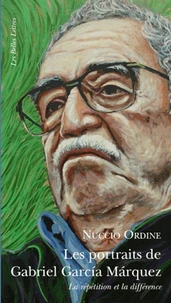
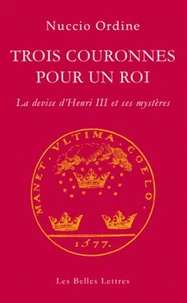
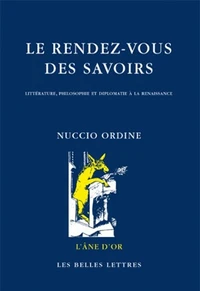
Nuccio Ordine (né en Italie, à Diamante, en 1958) enseigne la littérature italienne à l'Université de Calabre. Visiting professor dans diverses universités européennes (l'ENS, l'EHESS et l'Université Paris-IV-Sorbonne à Paris ; le Warburg Institute à Londres ; le Max-Planck Institut à Berlin) et américaines (Yale, NYU), il a publié plusieurs ouvrages sur Giordano Bruno et sur la Renaissance, traduits en neuf langues (dont le chinois, le japonais et le russe) : Le mystère de l'une (2005'), Le seuil de l'ombre (2003), Giordano Bruno, Ronsard et la religion (2004), Le rendez-vous des savoirs (20092), Trois couronnes pour un roi (2011). Il a publié récemment Les portraits de Gabriel Garcia Marquez. La répétition et la différence (2012). Avec Yves Hersant, il dirige trois collections d'ouvrages classiques aux éditions Les Belles Lettres.
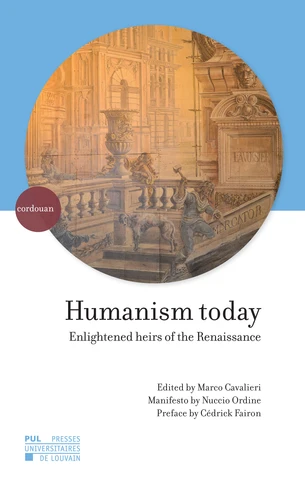
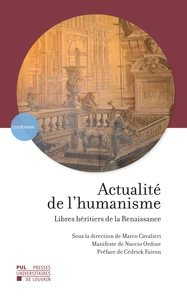
Humanism today. Enlightened heirs of the Renaissance
Par :Formats :
- Paiement en ligne :
- Livraison à domicile ou en point Mondial Relay estimée à partir du 25 marsCet article sera commandé chez un fournisseur et vous sera envoyé 7 jours après la date de votre commande.
- Retrait Click and Collect en magasin gratuit
- Livraison à domicile ou en point Mondial Relay estimée à partir du 25 mars
- Nombre de pages134
- PrésentationBroché
- Poids0.174 kg
- Dimensions13,4 cm × 21,4 cm × 0,0 cm
- ISBN978-2-87558-858-6
- EAN9782875588586
- Date de parution07/12/2019
- CollectionCordouan
- ÉditeurPU LOUVAIN
- EditeurMarco Cavalieri
Résumé
The world urgently needs to return to humanism, the emancipatory movement born in the Renaissance and founded on a surge of critical thought, a return to ancient sources, and the development of universities - a notion which seems to some obsolete, to others politically appropriated. Researchers and professors at UCLouvain say that university education, beyond the seven liberal arts which comprise the mastery of figures and letters, can only be humanist, today like yesterday : its goal is to forge citizens who use their talents and skills to serve others and in whom intelligence is inseparable from ethical awareness.
In 1425, the institutional bull of the University of Louvain expressed in surprisingly simple and visionary terms the university's founding principles, as well as its vocation, its rootedness in society, and the unique bonds that unite its students, researchers and professors. Thanks to Guido Latré, this modest volume includes a previously unpublished English translation of this essential document of the late Middle Ages.
This book is a compass for the mind.
In 1425, the institutional bull of the University of Louvain expressed in surprisingly simple and visionary terms the university's founding principles, as well as its vocation, its rootedness in society, and the unique bonds that unite its students, researchers and professors. Thanks to Guido Latré, this modest volume includes a previously unpublished English translation of this essential document of the late Middle Ages.
This book is a compass for the mind.
A propos de Nuccio Ordine
15,00 €
5/5
11,00 €
21,00 €


La Mandragore. Edition bilingue français-italien
Grand Format
45,00 €
28,75 €
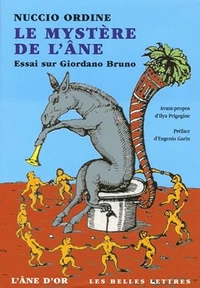
Le Mystère de l'âne. Essai sur Giordano Bruno
Grand Format
32,00 €
Baldus Livres I - V. Edition bilingue
Grand Format
51,00 €

Vous aimerez aussi

Les dix renoncements qui ont fait la France
Grand Format
23,00 €
1966, année mirifique
Grand Format
26,50 €
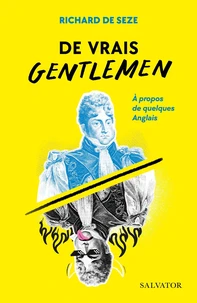
De vrais gentlemen. A propos de quelques Anglais
Grand Format
16,00 €
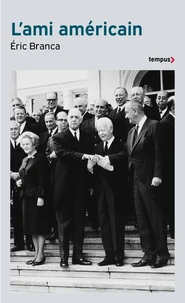
L'ami américain
Poche
10,00 €
17,00 €