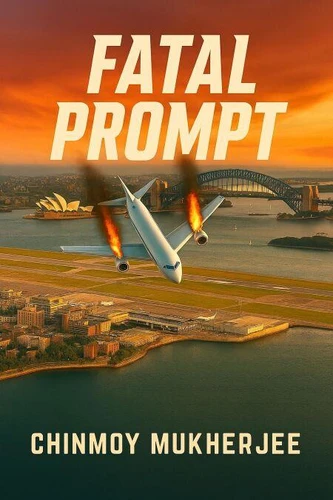
Fatal Prompt is a cautionary novella set in a near-future world, exploring the perils of corporate greed, outsourcing, and overreliance on AI in aviation maintenance. The story begins with Birgin Airlines outsourcing its fleet's upkeep, including the Poeing 786 Drumliner, to PCS Global Solutions under a fixed-price contract worth $24 million. To cut costs, PCS fires experienced Australian engineers and replaces them with four inexperienced Indian visa holders armed with fabricated resumes and premium licenses for ChunmunGPT, an AI tool touted as their "guru" for troubleshooting.
The team, overwhelmed and unqualified, blindly copies AI-generated code to fix issues, introducing subtle errors, including a fatal typo in the fuel switch logic (if(x=1) instead of if(x==1)). Near-misses accumulate, but cover-ups and pressure from PCS CEO Rajesh Patel prevent escalation, setting the stage for tragedy. The narrative builds to the catastrophic crash of Flight 482 on June 12, 2025, when the flawed code triggers a dual-engine cutoff during takeoff, killing 259 people and leaving Arvind Kumar as the sole survivor.
Initial blame shifts among pilots, the airline, and AI, but investigations reveal the root cause: PCS's negligence and the unchecked AI-assisted patch. The story delves into the emotional aftermath, including the old guard engineers' resentment, the team's guilt-ridden cover-ups, and global outrage. Through courtroom drama, Patel and the engineers face justice, with Sheena Murali's testimony exposing the systemic failures driven by profit over safety.
In the reckoning, reforms reshape the industry: bans on AI in critical systems, mandates for human expertise, and massive fines dismantle involved corporations. The novella concludes with a legacy of ethical lessons, transforming the disaster into a catalyst for safer skies, as survivors like Arvind advocate for change, ensuring the "lethal prompt" serves as a perpetual warning against technological hubris.
Fatal Prompt is a cautionary novella set in a near-future world, exploring the perils of corporate greed, outsourcing, and overreliance on AI in aviation maintenance. The story begins with Birgin Airlines outsourcing its fleet's upkeep, including the Poeing 786 Drumliner, to PCS Global Solutions under a fixed-price contract worth $24 million. To cut costs, PCS fires experienced Australian engineers and replaces them with four inexperienced Indian visa holders armed with fabricated resumes and premium licenses for ChunmunGPT, an AI tool touted as their "guru" for troubleshooting.
The team, overwhelmed and unqualified, blindly copies AI-generated code to fix issues, introducing subtle errors, including a fatal typo in the fuel switch logic (if(x=1) instead of if(x==1)). Near-misses accumulate, but cover-ups and pressure from PCS CEO Rajesh Patel prevent escalation, setting the stage for tragedy. The narrative builds to the catastrophic crash of Flight 482 on June 12, 2025, when the flawed code triggers a dual-engine cutoff during takeoff, killing 259 people and leaving Arvind Kumar as the sole survivor.
Initial blame shifts among pilots, the airline, and AI, but investigations reveal the root cause: PCS's negligence and the unchecked AI-assisted patch. The story delves into the emotional aftermath, including the old guard engineers' resentment, the team's guilt-ridden cover-ups, and global outrage. Through courtroom drama, Patel and the engineers face justice, with Sheena Murali's testimony exposing the systemic failures driven by profit over safety.
In the reckoning, reforms reshape the industry: bans on AI in critical systems, mandates for human expertise, and massive fines dismantle involved corporations. The novella concludes with a legacy of ethical lessons, transforming the disaster into a catalyst for safer skies, as survivors like Arvind advocate for change, ensuring the "lethal prompt" serves as a perpetual warning against technological hubris.


 , qui est-ce ?