
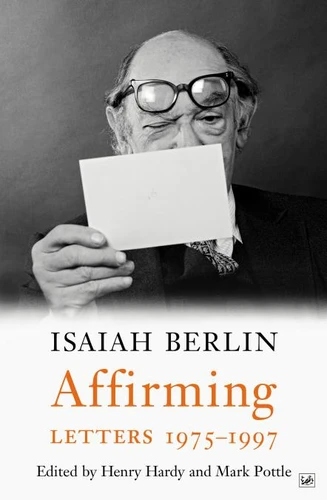
Affirming. Letters 1975-1997
Par :Formats :
Disponible dans votre compte client Decitre ou Furet du Nord dès validation de votre commande. Le format ePub protégé est :
- Compatible avec une lecture sur My Vivlio (smartphone, tablette, ordinateur)
- Compatible avec une lecture sur liseuses Vivlio
- Pour les liseuses autres que Vivlio, vous devez utiliser le logiciel Adobe Digital Edition. Non compatible avec la lecture sur les liseuses Kindle, Remarkable et Sony
- Non compatible avec un achat hors France métropolitaine
 , qui est-ce ?
Notre partenaire de plateforme de lecture numérique où vous retrouverez l'ensemble de vos ebooks gratuitement
Pour en savoir plus sur nos ebooks, consultez notre aide en ligne ici
C'est si simple ! Lisez votre ebook avec l'app Vivlio sur votre tablette, mobile ou ordinateur :

- Nombre de pages704
- FormatePub
- ISBN978-1-4735-5539-6
- EAN9781473555396
- Date de parution07/09/2017
- Protection num.Adobe DRM
- Infos supplémentairesepub
- ÉditeurVintage Digital
Résumé
'IB was one of the great affirmers of our time.' John Banville, New York Review of BooksThe title of this final volume of Isaiah Berlin's letters is echoed by John Banville's verdict in his review of its predecessor, Building: Letters 1960-75, which saw Berlin publish some of his most important work, and create, in Oxford's Wolfson College, an institutional and architectural legacy. In the period covered by this new volume (1975-97) he consolidates his intellectual legacy with a series of essay collections.
These generate many requests for clarification from his readers, and stimulate him to reaffirm and sometimes refine his ideas, throwing substantive new light on his thought as he grapples with human issues of enduring importance. Berlin's comments on world affairs, especially the continuing conflict between Israel and the Palestinians, and the collapse of Communism, are characteristically acute. This is also the era of the Northern Ireland Troubles, the Iranian revolution, the rise of Solidarity in Poland, the Chernobyl nuclear disaster, the fall of the Berlin Wall, Ayatollah Khomeini's fatwa against Salman Rushdie, the spread of Islamic fundamentalism, and wars in the Falkland Islands, the Persian Gulf and the Balkans.
Berlin scrutinises the leading politicians of the day, including Reagan, Thatcher and Gorbachev, and draws illuminating sketches of public figures, notably contrasting the personas of Alexander Solzhenitsyn and Andrey Sakharov. He declines a peerage, is awarded the Agnelli Prize for ethics, campaigns against philistine architecture in London and Jerusalem, helps run the National Gallery and Covent Garden, and talks at length to his biographer.
He reflects on the ideas for which he is famous - especially liberty and pluralism - and there is a generous leavening of the conversational brilliance for which he is also renowned, as he corresponds with friends about politics, the academic world, music and musicians, art and artists, and writers and their work, always displaying a Shakespearean fascination with the variety of humankind. Affirming is the crowning achievement both of Berlin's epistolary life and of the widely acclaimed edition of his letters whose first volume appeared in 2004.
These generate many requests for clarification from his readers, and stimulate him to reaffirm and sometimes refine his ideas, throwing substantive new light on his thought as he grapples with human issues of enduring importance. Berlin's comments on world affairs, especially the continuing conflict between Israel and the Palestinians, and the collapse of Communism, are characteristically acute. This is also the era of the Northern Ireland Troubles, the Iranian revolution, the rise of Solidarity in Poland, the Chernobyl nuclear disaster, the fall of the Berlin Wall, Ayatollah Khomeini's fatwa against Salman Rushdie, the spread of Islamic fundamentalism, and wars in the Falkland Islands, the Persian Gulf and the Balkans.
Berlin scrutinises the leading politicians of the day, including Reagan, Thatcher and Gorbachev, and draws illuminating sketches of public figures, notably contrasting the personas of Alexander Solzhenitsyn and Andrey Sakharov. He declines a peerage, is awarded the Agnelli Prize for ethics, campaigns against philistine architecture in London and Jerusalem, helps run the National Gallery and Covent Garden, and talks at length to his biographer.
He reflects on the ideas for which he is famous - especially liberty and pluralism - and there is a generous leavening of the conversational brilliance for which he is also renowned, as he corresponds with friends about politics, the academic world, music and musicians, art and artists, and writers and their work, always displaying a Shakespearean fascination with the variety of humankind. Affirming is the crowning achievement both of Berlin's epistolary life and of the widely acclaimed edition of his letters whose first volume appeared in 2004.
A propos de Isaiah Berlin


Le sens des réalités
E-book
10,99 €


First Love
E-book
9,49 €
14,99 €
Russian Thinkers
E-book
9,49 €
14,99 €
12,99 €
14,99 €
Personal Impressions
E-book
12,99 €

12,99 €

17,99 €
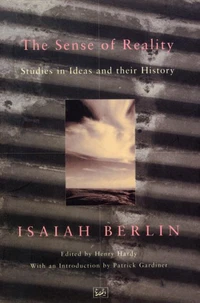
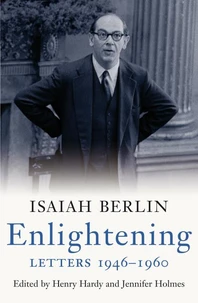
12,99 €
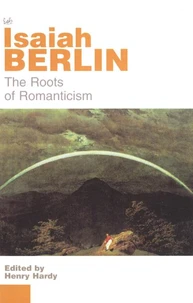
The Roots of Romanticism
E-book
12,99 €
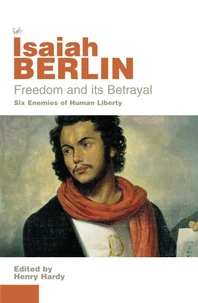
Freedom And Its Betrayal
E-book
14,99 €

The Power Of Ideas
E-book
14,99 €