
Standing up for the voiceless ?. Exploring the EU's Capacity for Rights Protection
Par : ,Formats :
- Paiement en ligne :
- Livraison à domicile ou en point Mondial Relay estimée à partir du 31 marsCet article sera commandé chez un fournisseur et vous sera envoyé 9 jours après la date de votre commande.
- Retrait Click and Collect en magasin gratuit
- Livraison à domicile ou en point Mondial Relay estimée à partir du 31 mars
- Réservation en ligne avec paiement en magasin :
- Indisponible pour réserver et payer en magasin
- Nombre de pages294
- FormatGrand Format
- PrésentationBroché
- Poids0.44 kg
- Dimensions15,5 cm × 23,0 cm × 1,7 cm
- ISBN978-2-8028-0538-0
- EAN9782802805380
- Date de parution20/07/2025
- CollectionCollection générale
- ÉditeurFU Saint-Louis
Résumé
Standing Up for the Voiceless ? Exploring the EU's Capacity for Rights Protection In an era marked by a crisis of liberal values - notably within Europe - and mounting challenges to fundamental rights, Standing Up for the Voiceless ? explores the European Union's evolving role in fostering political inclusion. At its core, the volume seeks to engage with a pressing question : does the EU truly amplify the voices of the marginalized—or, more pointedly, the voiceless ? Emerging from the Jean Monnet Centre of Excellence "Un-Muting Europe," this collection brings together fresh perspectives from early-career scholars across disciplines and borders.
Through a diverse set of case studies - ranging from environmental justice and migration to democratic backsliding and digital rights - it critically examines how EU institutions interact with those historically silenced, including stateless individuals, minority groups, future generations, and even non-human entities. Adopting a sharp interdisciplinary lens, the book moves beyond institutional rhetoric to question whether the EU's discourse of participation and protection translates into tangible outcomes.
Does the European Union function as a genuine platform for empowerment due to its unique institutional architecture - or does it, paradoxically, contribute to the very silencing it seeks to prevent ? Timely and thought-provoking, this volume is essential reading for anyone interested in the legitimacy of European governance, the politics of voice and silence, and the future of rights protection in the EU.
Through a diverse set of case studies - ranging from environmental justice and migration to democratic backsliding and digital rights - it critically examines how EU institutions interact with those historically silenced, including stateless individuals, minority groups, future generations, and even non-human entities. Adopting a sharp interdisciplinary lens, the book moves beyond institutional rhetoric to question whether the EU's discourse of participation and protection translates into tangible outcomes.
Does the European Union function as a genuine platform for empowerment due to its unique institutional architecture - or does it, paradoxically, contribute to the very silencing it seeks to prevent ? Timely and thought-provoking, this volume is essential reading for anyone interested in the legitimacy of European governance, the politics of voice and silence, and the future of rights protection in the EU.
A propos de Denis Duez



29,00 €


Vous aimerez aussi

Code civil annoté. Edition limitée
Edition 2026
Edition 2026
Grand Format
22,00 €

37,00 €
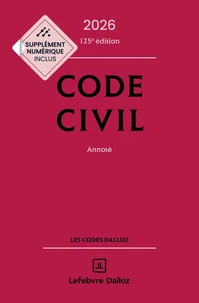
Code civil, annoté
Edition 2026
Edition 2026
Grand Format
49,00 €