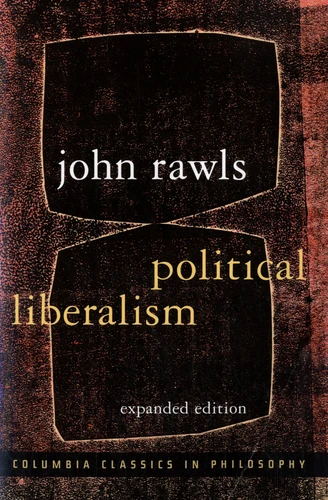
This book continues and revises the ideas of justice as fairness that John Rawls presented in A Theory of Justice but changes its philosophical interpretation in a fundamental way. That previous work argued that a "well-ordered society" is possible, one that is stable and relatively homogenous in its basic moral beliefs. Yet in modern democratic society, a multitude of incompatible and irreconcilable doctrines - religious, philosophical, and moral - coexist within the framework of democratic institutions.
Recognizing this as a permanent condition of democracy, Rawls asks how a stable and just society of free and equal citizens can live in concord when divided by reasonable but incompatible doctrines. His answer is based on a reconceiving of a "well-ordered society." It is no longer regarded as a society united in its basic moral beliefs but instead in its political conception of justice. Justice as fairness is now presented as an example of such a political conception ; that it can be the focus of an overlapping consensus means that it can be endorsed by the main religious, philosophical, and moral doctrines that endure over time in a well-ordered society.
Such a consensus, Rawls believes, represents the most likely social unity available in a constitutional democratic regime. This edition includes the essay "The Idea of Public Reason Revisited," which outlines Rawls's plan to revise Political Liberalism, cut short by his death.
This book continues and revises the ideas of justice as fairness that John Rawls presented in A Theory of Justice but changes its philosophical interpretation in a fundamental way. That previous work argued that a "well-ordered society" is possible, one that is stable and relatively homogenous in its basic moral beliefs. Yet in modern democratic society, a multitude of incompatible and irreconcilable doctrines - religious, philosophical, and moral - coexist within the framework of democratic institutions.
Recognizing this as a permanent condition of democracy, Rawls asks how a stable and just society of free and equal citizens can live in concord when divided by reasonable but incompatible doctrines. His answer is based on a reconceiving of a "well-ordered society." It is no longer regarded as a society united in its basic moral beliefs but instead in its political conception of justice. Justice as fairness is now presented as an example of such a political conception ; that it can be the focus of an overlapping consensus means that it can be endorsed by the main religious, philosophical, and moral doctrines that endure over time in a well-ordered society.
Such a consensus, Rawls believes, represents the most likely social unity available in a constitutional democratic regime. This edition includes the essay "The Idea of Public Reason Revisited," which outlines Rawls's plan to revise Political Liberalism, cut short by his death.