
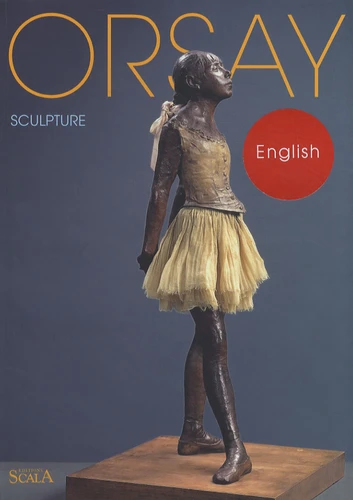
Orsay Sculpture
Par :Formats :
Actuellement indisponible
Cet article est actuellement indisponible, il ne peut pas être commandé sur notre site pour le moment. Nous vous invitons à vous inscrire à l'alerte disponibilité, vous recevrez un e-mail dès que cet ouvrage sera à nouveau disponible.
- Nombre de pages128
- PrésentationBroché
- Poids0.582 kg
- Dimensions19,5 cm × 27,6 cm × 1,0 cm
- ISBN2-86656-315-8
- EAN9782866563158
- Date de parution18/09/2003
- Collectionles grands musees
- ÉditeurScala
Résumé
The Musée d'Orsay, displaying art from the second half of the 19th century, is housed in the former Gare d'Orsay, built by Victor Laloux for the World Fair of 1900. The profuse and constantly changing light, entering via Laloux's large metal vault, means that sculpture has been given pride of place rather than more light-sensitive works. Millions of visitors have surged into the concourse since the museum opened in december 1986 ; enjoying and perhaps being surprised by works emerging from a long period in purgatory.
A considerable quantity of the 19th century sculpture had been consigned to museum cellars, government office corridors or other even less salubrious places as a result of changing tastes in the first half of the 20th century. The museum recreates part of the former Luxembourg collection of 19th century works, and recent purchases have been carefully chosen so that visitors can be presented with a complete story of sculpture in the period.
This book, atone of its kind, brings together 150 of the Musée d'Orsay's finest works. The objects are grouped together by movement, such as Neoclassicism, Romanticism, Impressionism. In addition, two of the collection’s leading lights - Carpeaux and Rodin - are featured individually.
A considerable quantity of the 19th century sculpture had been consigned to museum cellars, government office corridors or other even less salubrious places as a result of changing tastes in the first half of the 20th century. The museum recreates part of the former Luxembourg collection of 19th century works, and recent purchases have been carefully chosen so that visitors can be presented with a complete story of sculpture in the period.
This book, atone of its kind, brings together 150 of the Musée d'Orsay's finest works. The objects are grouped together by movement, such as Neoclassicism, Romanticism, Impressionism. In addition, two of the collection’s leading lights - Carpeaux and Rodin - are featured individually.
A propos de Anne Pingeot


Il savait que je gardais tout. Entretiens
Grand Format
12,50 €