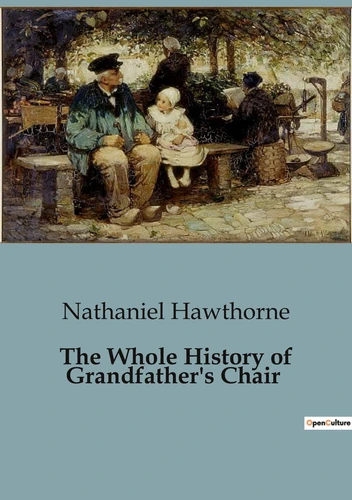
"The Whole History of Grandfather's Chair" by Nathaniel Hawthorne is a historical narrative that intertwines the story of a venerable chair with the early history of New England. The chair, a symbol of continuity and tradition, serves as a witness to significant events and figures from the 17th century. The narrative begins with the Puritans' migration to America, highlighting the trials and tribulations they faced in establishing new settlements.
The chair is first associated with the Lady Arbella, who, along with her husband, sought religious freedom in the New World but tragically succumbed to the harsh conditions. As the story progresses, the chair passes through the hands of various pivotal figures, including Roger Williams, who was banished for his beliefs and founded Providence, and Anne Hutchinson, whose religious meetings led to her own banishment.
The narrative also touches on the Quaker persecution, illustrating the intolerance of the time, and the efforts of John Eliot, the "Apostle to the Indians, " who sought to convert Native Americans to Christianity. Through these stories, Hawthorne provides a vivid portrayal of the challenges and complexities of early colonial life, using the chair as a narrative device to connect disparate historical events and personalities.
"The Whole History of Grandfather's Chair" by Nathaniel Hawthorne is a historical narrative that intertwines the story of a venerable chair with the early history of New England. The chair, a symbol of continuity and tradition, serves as a witness to significant events and figures from the 17th century. The narrative begins with the Puritans' migration to America, highlighting the trials and tribulations they faced in establishing new settlements.
The chair is first associated with the Lady Arbella, who, along with her husband, sought religious freedom in the New World but tragically succumbed to the harsh conditions. As the story progresses, the chair passes through the hands of various pivotal figures, including Roger Williams, who was banished for his beliefs and founded Providence, and Anne Hutchinson, whose religious meetings led to her own banishment.
The narrative also touches on the Quaker persecution, illustrating the intolerance of the time, and the efforts of John Eliot, the "Apostle to the Indians, " who sought to convert Native Americans to Christianity. Through these stories, Hawthorne provides a vivid portrayal of the challenges and complexities of early colonial life, using the chair as a narrative device to connect disparate historical events and personalities.