
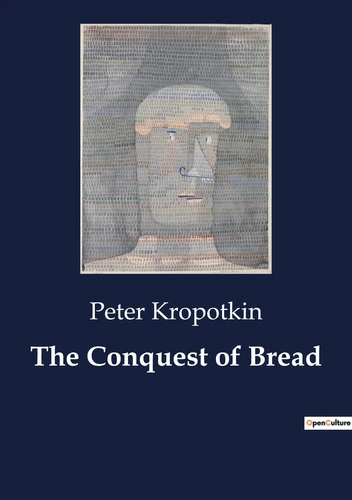
The Conquest of Bread. The Path to a Society of Equality and Abundance
Par :Formats :
- Paiement en ligne :
- Livraison à domicile ou en point Mondial Relay estimée à partir du 31 marsCet article sera commandé chez un fournisseur et vous sera envoyé 21 jours après la date de votre commande.
- Retrait Click and Collect en magasin gratuit
- Livraison à domicile ou en point Mondial Relay estimée à partir du 31 mars
- Nombre de pages268
- PrésentationBroché
- Poids0.351 kg
- Dimensions14,8 cm × 21,0 cm × 1,5 cm
- ISBN979-10-418-0461-0
- EAN9791041804610
- Date de parution23/06/2023
- ÉditeurCulturea
Résumé
"The Conquest of Bread" by Peter Kropotkin is a seminal work that envisions a society where resources and wealth are equitably distributed among all individuals. Kropotkin critiques the existing socio-economic structures that concentrate wealth and resources in the hands of a few, leading to widespread poverty and inequality. He argues that the means of production, which have been developed through the collective efforts of past generations, should be communally owned to ensure well-being for all.
The book emphasizes the potential for abundance, given the advancements in technology and production capabilities, if only these resources were managed for the collective good rather than individual profit. Kropotkin advocates for a social revolution that would dismantle the current systems of ownership and replace them with communal management of resources. He envisions a society where the needs of the people are prioritized, and everyone has access to the essentials of life, such as food, shelter, and education.
The text is a call to action for a radical restructuring of society, emphasizing that well-being for all is not a utopian dream but a feasible reality if resources are shared equitably. Kropotkin's work remains influential in discussions of anarchist-communism and continues to inspire those seeking social and economic justice.
The book emphasizes the potential for abundance, given the advancements in technology and production capabilities, if only these resources were managed for the collective good rather than individual profit. Kropotkin advocates for a social revolution that would dismantle the current systems of ownership and replace them with communal management of resources. He envisions a society where the needs of the people are prioritized, and everyone has access to the essentials of life, such as food, shelter, and education.
The text is a call to action for a radical restructuring of society, emphasizing that well-being for all is not a utopian dream but a feasible reality if resources are shared equitably. Kropotkin's work remains influential in discussions of anarchist-communism and continues to inspire those seeking social and economic justice.
A propos de Peter Kropotkin


Vous aimerez aussi

A travers la vie et la mort
Grand Format
24,00 €