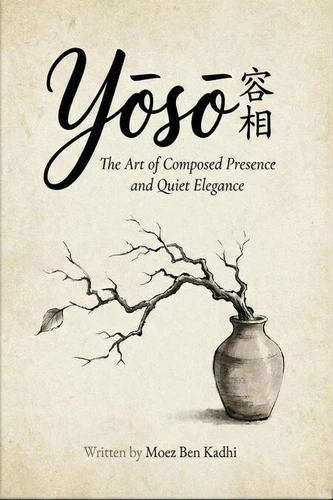
In a world that often celebrates the loud, the immediate, and the spectacular, there is a quiet force that is easily overlooked: presence without assertion, elegance without display, composure without performance. This force is yoso, ??, a Japanese concept that does not describe beauty as we usually understand it, but rather the bearing, alignment, and quiet authority of the individual. It is the subtle art of how one carries oneself through life, the invisible rhythm that governs movement, posture, stillness, and attention.
Yoso is not learned in grand gestures or dramatic demonstrations. It is cultivated in ordinary moments: rising from bed, walking across a room, sitting in silence, listening attentively, pausing thoughtfully, or even waiting without fidgeting. It is a practice of observation, restraint, and awareness, a discipline that shapes the body, trains the mind, and guides the spirit toward understated elegance.
At its core, yoso emphasizes the integration of body, mind, and environment. The spine aligns naturally, the weight grounds steadily, and breath flows in harmony with movement. Even stillness is deliberate. Energy is held in readiness, gestures are minimal yet meaningful, and silence is rich with attention. The practitioner communicates without demanding recognition, influences without intrusion, and inhabits space without dominating it.
This is the power of the quiet and restrained: influence is felt, even when unspoken, and authority arises naturally, from presence rather than performance. The philosophy of yoso is deeply ethical as well as aesthetic. How one carries oneself affects not only the self but also the world around them. Posture, gestures, and alignment shape the rhythm of interactions. Attention and restraint demonstrate respect.
Pauses and silence create space for thought and observation. The invisible yet palpable thread of composure weaves through every encounter, stabilizing relationships and environments in subtle ways. Yoso is not instant mastery; it is a lifelong practice. Each moment offers opportunity: to observe oneself, to refine posture, to cultivate awareness, to restrain unnecessary motion, to listen fully, and to act deliberately.
Over time, these micro-practices accumulate, shaping the individual into someone who moves through life with coherence, patience, and understated elegance. The ordinary becomes extraordinary, not through display, but through alignment, restraint, and subtlety.
In a world that often celebrates the loud, the immediate, and the spectacular, there is a quiet force that is easily overlooked: presence without assertion, elegance without display, composure without performance. This force is yoso, ??, a Japanese concept that does not describe beauty as we usually understand it, but rather the bearing, alignment, and quiet authority of the individual. It is the subtle art of how one carries oneself through life, the invisible rhythm that governs movement, posture, stillness, and attention.
Yoso is not learned in grand gestures or dramatic demonstrations. It is cultivated in ordinary moments: rising from bed, walking across a room, sitting in silence, listening attentively, pausing thoughtfully, or even waiting without fidgeting. It is a practice of observation, restraint, and awareness, a discipline that shapes the body, trains the mind, and guides the spirit toward understated elegance.
At its core, yoso emphasizes the integration of body, mind, and environment. The spine aligns naturally, the weight grounds steadily, and breath flows in harmony with movement. Even stillness is deliberate. Energy is held in readiness, gestures are minimal yet meaningful, and silence is rich with attention. The practitioner communicates without demanding recognition, influences without intrusion, and inhabits space without dominating it.
This is the power of the quiet and restrained: influence is felt, even when unspoken, and authority arises naturally, from presence rather than performance. The philosophy of yoso is deeply ethical as well as aesthetic. How one carries oneself affects not only the self but also the world around them. Posture, gestures, and alignment shape the rhythm of interactions. Attention and restraint demonstrate respect.
Pauses and silence create space for thought and observation. The invisible yet palpable thread of composure weaves through every encounter, stabilizing relationships and environments in subtle ways. Yoso is not instant mastery; it is a lifelong practice. Each moment offers opportunity: to observe oneself, to refine posture, to cultivate awareness, to restrain unnecessary motion, to listen fully, and to act deliberately.
Over time, these micro-practices accumulate, shaping the individual into someone who moves through life with coherence, patience, and understated elegance. The ordinary becomes extraordinary, not through display, but through alignment, restraint, and subtlety.

 , qui est-ce ?