
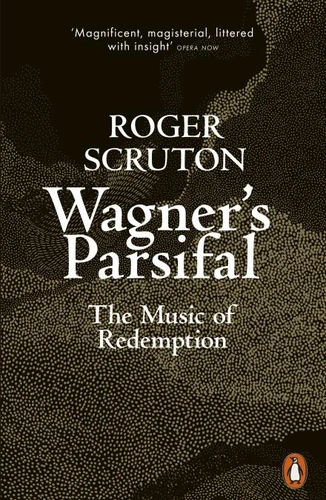
Wagner's Parsifal. The Music of Redemption
Par :Formats :
Disponible dans votre compte client Decitre ou Furet du Nord dès validation de votre commande. Le format ePub protégé est :
- Compatible avec une lecture sur My Vivlio (smartphone, tablette, ordinateur)
- Compatible avec une lecture sur liseuses Vivlio
- Pour les liseuses autres que Vivlio, vous devez utiliser le logiciel Adobe Digital Edition. Non compatible avec la lecture sur les liseuses Kindle, Remarkable et Sony
- Non compatible avec un achat hors France métropolitaine
 , qui est-ce ?
Notre partenaire de plateforme de lecture numérique où vous retrouverez l'ensemble de vos ebooks gratuitement
Pour en savoir plus sur nos ebooks, consultez notre aide en ligne ici
C'est si simple ! Lisez votre ebook avec l'app Vivlio sur votre tablette, mobile ou ordinateur :

- Nombre de pages208
- FormatePub
- ISBN978-0-241-41970-0
- EAN9780241419700
- Date de parution07/05/2020
- Protection num.Adobe DRM
- Infos supplémentairesepub
- ÉditeurPENGUIN
Résumé
A superbly insightful and moving exploration of Wagner's last opera, by one of Britain's leading intellectuals Wagner's last music-drama tells the story of Parsifal, the 'pure fool, knowing through compassion', who has been called to rescue the Kingdom of the Grail from the sins that have polluted it. The Grail is a symbol of purity in a world of lust and power, but although Parsifal is the culmination of Wagner's life-long obsession with the religious frame of mind, the redemption sought by his characters is far from the Christian archetype.
For Wagner, redemption occurs inthis life, when compassion prevails over enslavement, and purity replaces spiritual pollution. His music here ties together suffering and contrition, sin and forgiveness, downfall and redemption in an inextricable knot, healing the fractures and uniting the warring elements in human life in a way that is clear, convincing and uncanny. More than any other of his works, Parsifal expresses in music a depth of feeling for which we do not have words.
This short but penetrating book, by a writer who was uniquely both a leading philosopher and musicologist, shows us how Wagner achieves this profound work, explaining the story, its musical ideas, and their coming together into a sublime whole which gives us the musical equivalent of forgiveness and closure. There are few writers who can so enhance our understanding of one of the greatest works in western music.
For Wagner, redemption occurs inthis life, when compassion prevails over enslavement, and purity replaces spiritual pollution. His music here ties together suffering and contrition, sin and forgiveness, downfall and redemption in an inextricable knot, healing the fractures and uniting the warring elements in human life in a way that is clear, convincing and uncanny. More than any other of his works, Parsifal expresses in music a depth of feeling for which we do not have words.
This short but penetrating book, by a writer who was uniquely both a leading philosopher and musicologist, shows us how Wagner achieves this profound work, explaining the story, its musical ideas, and their coming together into a sublime whole which gives us the musical equivalent of forgiveness and closure. There are few writers who can so enhance our understanding of one of the greatest works in western music.
A propos de Roger Scruton

11,99 €

5/5
23,00 €
16,99 €
Conservatisme
E-book
13,99 €
Sulla natura umana
E-book
10,99 €
Il volto di Dio
E-book
11,99 €

Town And Country
E-book
6,99 €
Je bois donc je suis
E-book
14,99 €
5/5
18,00 €
27,70 €