
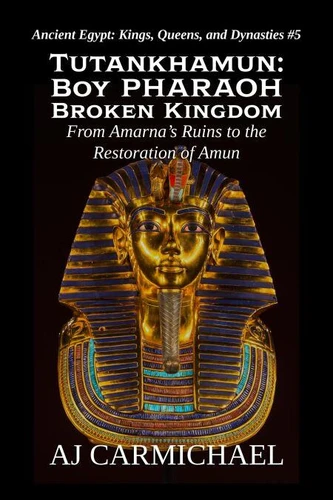
Tutankhamun: Boy Pharaoh, Broken Kingdom. Ancient Egypt: Kings, Queens, and Dynasties, #5
Par :Formats :
Disponible dans votre compte client Decitre ou Furet du Nord dès validation de votre commande. Le format ePub est :
- Compatible avec une lecture sur My Vivlio (smartphone, tablette, ordinateur)
- Compatible avec une lecture sur liseuses Vivlio
- Pour les liseuses autres que Vivlio, vous devez utiliser le logiciel Adobe Digital Edition. Non compatible avec la lecture sur les liseuses Kindle, Remarkable et Sony
 , qui est-ce ?
Notre partenaire de plateforme de lecture numérique où vous retrouverez l'ensemble de vos ebooks gratuitement
Pour en savoir plus sur nos ebooks, consultez notre aide en ligne ici
C'est si simple ! Lisez votre ebook avec l'app Vivlio sur votre tablette, mobile ou ordinateur :

- FormatePub
- ISBN8232918293
- EAN9798232918293
- Date de parution21/09/2025
- Protection num.pas de protection
- Infos supplémentairesepub
- ÉditeurHamza elmir
Résumé
A child ascends a broken throne. Temples stand silent, the gods' names scarred from stone, and Egypt's borders feel the press of rivals. In Tutankhamun: The Living Image, the boy who began as Tutankhaten and became Tutankhamun carries a nation's need to believe again. Drawing on inscriptions, art, and modern medical analysis, this book follows the young pharaoh from the aftershocks of Amarna to the careful choreography of restoration.
We meet Ay and Horemheb-the elder statesman and the general-who speak policy in the king's name; Ankhesenamun, the queen whose steadiness masks dynastic peril; and a court that learns to convert ritual into resilience. Here, Tutankhamun is neither a hollow mask nor a miracle worker; he is a necessary presence-fragile, visible, indispensable-around which Egypt ties its world back together. From coronation liturgies and temple economies to the intimate technologies of a life lived with pain, The Living Image reveals how a civilization repaired itself by renaming a king and performing belief until belief became true.
Gold dazzles; what endures is the courage of return.
We meet Ay and Horemheb-the elder statesman and the general-who speak policy in the king's name; Ankhesenamun, the queen whose steadiness masks dynastic peril; and a court that learns to convert ritual into resilience. Here, Tutankhamun is neither a hollow mask nor a miracle worker; he is a necessary presence-fragile, visible, indispensable-around which Egypt ties its world back together. From coronation liturgies and temple economies to the intimate technologies of a life lived with pain, The Living Image reveals how a civilization repaired itself by renaming a king and performing belief until belief became true.
Gold dazzles; what endures is the courage of return.
A child ascends a broken throne. Temples stand silent, the gods' names scarred from stone, and Egypt's borders feel the press of rivals. In Tutankhamun: The Living Image, the boy who began as Tutankhaten and became Tutankhamun carries a nation's need to believe again. Drawing on inscriptions, art, and modern medical analysis, this book follows the young pharaoh from the aftershocks of Amarna to the careful choreography of restoration.
We meet Ay and Horemheb-the elder statesman and the general-who speak policy in the king's name; Ankhesenamun, the queen whose steadiness masks dynastic peril; and a court that learns to convert ritual into resilience. Here, Tutankhamun is neither a hollow mask nor a miracle worker; he is a necessary presence-fragile, visible, indispensable-around which Egypt ties its world back together. From coronation liturgies and temple economies to the intimate technologies of a life lived with pain, The Living Image reveals how a civilization repaired itself by renaming a king and performing belief until belief became true.
Gold dazzles; what endures is the courage of return.
We meet Ay and Horemheb-the elder statesman and the general-who speak policy in the king's name; Ankhesenamun, the queen whose steadiness masks dynastic peril; and a court that learns to convert ritual into resilience. Here, Tutankhamun is neither a hollow mask nor a miracle worker; he is a necessary presence-fragile, visible, indispensable-around which Egypt ties its world back together. From coronation liturgies and temple economies to the intimate technologies of a life lived with pain, The Living Image reveals how a civilization repaired itself by renaming a king and performing belief until belief became true.
Gold dazzles; what endures is the courage of return.
A propos de A.J. Carmichael


6,99 €


