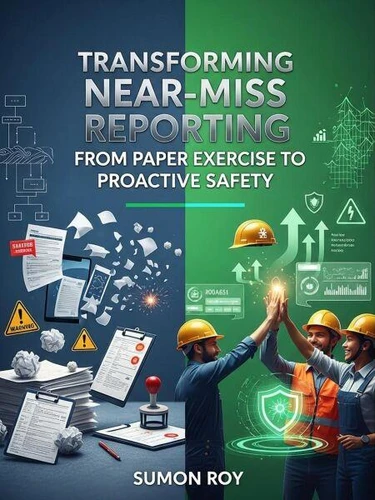
Transforming Near-Miss Reporting from Paper Exercise to Proactive Safety by Sumon Roy delivers a clear, practical framework for turning near-miss reporting into a proactive safety engine. Drawing from real-world safety management practices, the book shows organizations how to convert scattered incident data into a structured, searchable, and highly usable lessons-learned repository that strengthens safety culture, supports decision-making, and prevents repeat incidents.
Roy explains how a well-designed repository-organized by incident type, equipment, location, hazards, corrective actions, and safety-management elements-enables fast access to relevant historical insights. This categorization empowers teams to perform meaningful trend analysis, uncover systemic risks, and move beyond compliance-based reporting. The book emphasizes data quality and usability, detailing the essential components of an effective lessons-learned entry: incident description, root causes, lessons learned, corrective and preventive actions, follow-up effectiveness, and links to procedures or training materials.
With this approach, organizations can transform raw event records into a living knowledge resource that drives continuous improvement. Clear, actionable, and grounded in industry practice, this guide is ideal for safety professionals, supervisors, managers, and leaders seeking to build smarter, more proactive workplaces.
Transforming Near-Miss Reporting from Paper Exercise to Proactive Safety by Sumon Roy delivers a clear, practical framework for turning near-miss reporting into a proactive safety engine. Drawing from real-world safety management practices, the book shows organizations how to convert scattered incident data into a structured, searchable, and highly usable lessons-learned repository that strengthens safety culture, supports decision-making, and prevents repeat incidents.
Roy explains how a well-designed repository-organized by incident type, equipment, location, hazards, corrective actions, and safety-management elements-enables fast access to relevant historical insights. This categorization empowers teams to perform meaningful trend analysis, uncover systemic risks, and move beyond compliance-based reporting. The book emphasizes data quality and usability, detailing the essential components of an effective lessons-learned entry: incident description, root causes, lessons learned, corrective and preventive actions, follow-up effectiveness, and links to procedures or training materials.
With this approach, organizations can transform raw event records into a living knowledge resource that drives continuous improvement. Clear, actionable, and grounded in industry practice, this guide is ideal for safety professionals, supervisors, managers, and leaders seeking to build smarter, more proactive workplaces.


 , qui est-ce ?