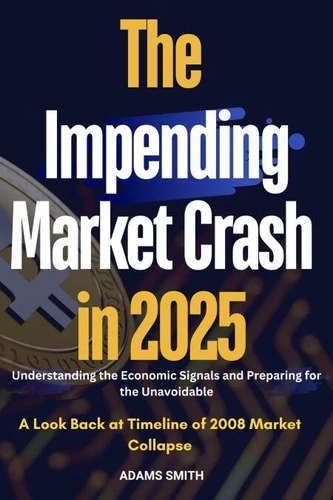
The Impending Market Crash in 2025 : Understanding the Economic Signals and Preparing for the Unavoidable - A Look Back at Timeline of 2008 Market Collapse
Par :Formats :
Disponible dans votre compte client Decitre ou Furet du Nord dès validation de votre commande. Le format ePub est :
- Compatible avec une lecture sur My Vivlio (smartphone, tablette, ordinateur)
- Compatible avec une lecture sur liseuses Vivlio
- Pour les liseuses autres que Vivlio, vous devez utiliser le logiciel Adobe Digital Edition. Non compatible avec la lecture sur les liseuses Kindle, Remarkable et Sony
 , qui est-ce ?
Notre partenaire de plateforme de lecture numérique où vous retrouverez l'ensemble de vos ebooks gratuitement
Pour en savoir plus sur nos ebooks, consultez notre aide en ligne ici
C'est si simple ! Lisez votre ebook avec l'app Vivlio sur votre tablette, mobile ou ordinateur :

- FormatePub
- ISBN8227731067
- EAN9798227731067
- Date de parution03/10/2024
- Protection num.pas de protection
- Infos supplémentairesepub
- ÉditeurBig Dog Books, LLC
Résumé
The looming financial landscape of 2025 has raised alarms among economists and investors alike. The warning signs are unmistakable, echoing the patterns witnessed before the catastrophic market crash of 2008. History has a way of repeating itself, and the patterns we observe today hint at a crisis that could surpass the depths of the last major economic downturn. As we delve into this topic, it's crucial to recognize the factors converging to create an environment ripe for instability.
To understand what lies ahead, we must first take a closer look at the undercurrents shaping the current economic climate. Several key indicators suggest a precarious future. Inflation rates are soaring, driven by supply chain disruptions and excessive monetary policy. The labor market, while appearing strong on the surface, conceals underlying vulnerabilities that could expose weaknesses when faced with a significant economic shock.
Interest rates are rising, as central banks scramble to combat inflation, tightening the financial environment. These elements coalesce to form a volatile mix, prompting questions about the sustainability of economic growth. A retrospective glance at the 2008 financial crisis provides valuable insights into our current trajectory. The crash wasn't just a sudden event; it was the culmination of years of misguided financial practices, regulatory failures, and unchecked market exuberance.
The housing bubble swelled under the weight of subprime mortgages and the notion that property values would continue to rise indefinitely. When that bubble burst, the fallout was catastrophic, leading to widespread foreclosures, bank failures, and a deep recession that reverberated across the globe. Today, we find ourselves in a different but equally perilous situation. The financial instruments that fueled the last crash have evolved but not disappeared.
New products have emerged, such as derivatives tied to cryptocurrencies and other speculative assets. While innovation can spur economic growth, it can also breed risk when left unchecked. As we navigate this complex landscape, understanding these financial instruments and their implications is essential. The intertwining of global economies adds another layer of complexity. The interconnectedness of markets means that a downturn in one region can send shockwaves worldwide.
Trade tensions, geopolitical conflicts, and public health crises have highlighted how fragile this interconnectedness can be. Emerging markets, once viewed as engines of growth, now present additional risks as they grapple with their own economic challenges. Technology plays a dual role in this scenario. On one hand, innovations in fintech and digital currencies promise efficiency and access. On the other hand, the rise of algorithmic trading and high-frequency trading has transformed the market's dynamics, often increasing volatility.
In this environment, preparation is paramount. Investors, businesses, and governments must brace for the potential fallout. The lessons learned from 2008 serve as a blueprint for the future, emphasizing the need for caution, due diligence, and proactive measures. Individuals should reassess their financial strategies, diversifying investments and prioritizing liquidity. Businesses need to adopt resilience planning, anticipating potential disruptions and maintaining flexibility in operations.
Governments must ensure regulatory frameworks are robust enough to address emerging risks, safeguarding the economy against potential shocks. History demonstrates that crises often serve as catalysts for change, prompting shifts in consumer behavior, investment patterns, and policy approaches. The aftermath of the 2008 crash saw increased scrutiny of financial institutions, leading to reforms aimed at preventing a repeat of past mistakes.
The question remains: What kind of economic model will emerge from the next downturn?
To understand what lies ahead, we must first take a closer look at the undercurrents shaping the current economic climate. Several key indicators suggest a precarious future. Inflation rates are soaring, driven by supply chain disruptions and excessive monetary policy. The labor market, while appearing strong on the surface, conceals underlying vulnerabilities that could expose weaknesses when faced with a significant economic shock.
Interest rates are rising, as central banks scramble to combat inflation, tightening the financial environment. These elements coalesce to form a volatile mix, prompting questions about the sustainability of economic growth. A retrospective glance at the 2008 financial crisis provides valuable insights into our current trajectory. The crash wasn't just a sudden event; it was the culmination of years of misguided financial practices, regulatory failures, and unchecked market exuberance.
The housing bubble swelled under the weight of subprime mortgages and the notion that property values would continue to rise indefinitely. When that bubble burst, the fallout was catastrophic, leading to widespread foreclosures, bank failures, and a deep recession that reverberated across the globe. Today, we find ourselves in a different but equally perilous situation. The financial instruments that fueled the last crash have evolved but not disappeared.
New products have emerged, such as derivatives tied to cryptocurrencies and other speculative assets. While innovation can spur economic growth, it can also breed risk when left unchecked. As we navigate this complex landscape, understanding these financial instruments and their implications is essential. The intertwining of global economies adds another layer of complexity. The interconnectedness of markets means that a downturn in one region can send shockwaves worldwide.
Trade tensions, geopolitical conflicts, and public health crises have highlighted how fragile this interconnectedness can be. Emerging markets, once viewed as engines of growth, now present additional risks as they grapple with their own economic challenges. Technology plays a dual role in this scenario. On one hand, innovations in fintech and digital currencies promise efficiency and access. On the other hand, the rise of algorithmic trading and high-frequency trading has transformed the market's dynamics, often increasing volatility.
In this environment, preparation is paramount. Investors, businesses, and governments must brace for the potential fallout. The lessons learned from 2008 serve as a blueprint for the future, emphasizing the need for caution, due diligence, and proactive measures. Individuals should reassess their financial strategies, diversifying investments and prioritizing liquidity. Businesses need to adopt resilience planning, anticipating potential disruptions and maintaining flexibility in operations.
Governments must ensure regulatory frameworks are robust enough to address emerging risks, safeguarding the economy against potential shocks. History demonstrates that crises often serve as catalysts for change, prompting shifts in consumer behavior, investment patterns, and policy approaches. The aftermath of the 2008 crash saw increased scrutiny of financial institutions, leading to reforms aimed at preventing a repeat of past mistakes.
The question remains: What kind of economic model will emerge from the next downturn?