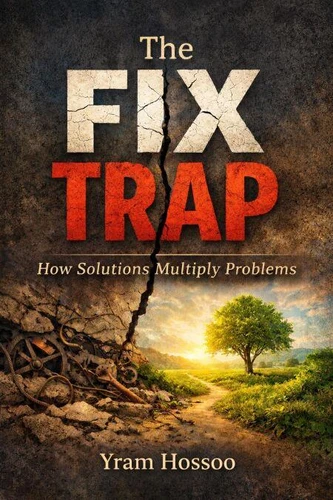
We live in a world obsessed with fixing. When something feels wrong, we intervene. When discomfort appears, we manage it. When uncertainty arises, we optimize it away. Over time, these well-intended responses quietly replace the intelligence of living systems with layers of control, oversight, and correction. The Fix Trap: How Solutions Multiply Problems is a calm, penetrating examination of how this pattern plays out across modern life-medicine, prevention, religion, psychology, education, work, and technology.
Rather than arguing against care or progress, Yram Hossoo reveals how early intervention and constant management often prevent systems from completing their own restorative processes. This book offers no techniques, programs, or prescriptions. Instead, it invites readers to recognize the difference between support and substitution, between care and control, and between fixing and restoration. Written in clear, accessible language, The Fix Trap helps readers rediscover trust in the body, in time, and in the quiet intelligence that emerges when interference ends.
For anyone who senses that life has become over-managed-and wonders what might return if we stepped back-this book leaves space for an answer to appear.
We live in a world obsessed with fixing. When something feels wrong, we intervene. When discomfort appears, we manage it. When uncertainty arises, we optimize it away. Over time, these well-intended responses quietly replace the intelligence of living systems with layers of control, oversight, and correction. The Fix Trap: How Solutions Multiply Problems is a calm, penetrating examination of how this pattern plays out across modern life-medicine, prevention, religion, psychology, education, work, and technology.
Rather than arguing against care or progress, Yram Hossoo reveals how early intervention and constant management often prevent systems from completing their own restorative processes. This book offers no techniques, programs, or prescriptions. Instead, it invites readers to recognize the difference between support and substitution, between care and control, and between fixing and restoration. Written in clear, accessible language, The Fix Trap helps readers rediscover trust in the body, in time, and in the quiet intelligence that emerges when interference ends.
For anyone who senses that life has become over-managed-and wonders what might return if we stepped back-this book leaves space for an answer to appear.


 , qui est-ce ?