
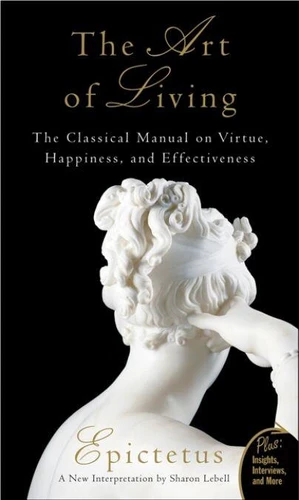
The Art of Living. The Classical Mannual on Virtue, Happiness, and Effectiveness
Par : ,Formats :
Disponible dans votre compte client Decitre ou Furet du Nord dès validation de votre commande. Le format ePub protégé est :
- Compatible avec une lecture sur My Vivlio (smartphone, tablette, ordinateur)
- Compatible avec une lecture sur liseuses Vivlio
- Pour les liseuses autres que Vivlio, vous devez utiliser le logiciel Adobe Digital Edition. Non compatible avec la lecture sur les liseuses Kindle, Remarkable et Sony
- Non compatible avec un achat hors France métropolitaine
 , qui est-ce ?
Notre partenaire de plateforme de lecture numérique où vous retrouverez l'ensemble de vos ebooks gratuitement
Pour en savoir plus sur nos ebooks, consultez notre aide en ligne ici
C'est si simple ! Lisez votre ebook avec l'app Vivlio sur votre tablette, mobile ou ordinateur :

- FormatePub
- ISBN978-0-06-227376-5
- EAN9780062273765
- Date de parution05/02/2013
- Protection num.Adobe DRM
- Infos supplémentairesepub
- ÉditeurHarperOne
Résumé
Epictetus was born into slavery about 55 ce in the eastern outreaches of the Roman Empire. Once freed, he established an influential school of Stoic philosophy, stressing that human beings cannot control life, only their responses to it. By putting into practice the ninety-three witty, wise, and razor-sharp instructions that make up The Art of Living, students learn to meet the challenges of everyday life successfully and to face life's inevitable losses and disappointments with grace: "Happiness and freedom begin with a clear understanding of one principle: Some things are within our control, and some things are not.
It is only after you have faced up to this fundamental rule and learned to distinguish between what you can and can't control that inner tranquility and outer effectiveness become possible. Within our control are our own opinions, aspirations, desires, and the things that repel us. These areas are quite rightly our concern, because they are directly subject to our influence. We always have a choice about the contents and character of our inner lives."
It is only after you have faced up to this fundamental rule and learned to distinguish between what you can and can't control that inner tranquility and outer effectiveness become possible. Within our control are our own opinions, aspirations, desires, and the things that repel us. These areas are quite rightly our concern, because they are directly subject to our influence. We always have a choice about the contents and character of our inner lives."
Epictetus was born into slavery about 55 ce in the eastern outreaches of the Roman Empire. Once freed, he established an influential school of Stoic philosophy, stressing that human beings cannot control life, only their responses to it. By putting into practice the ninety-three witty, wise, and razor-sharp instructions that make up The Art of Living, students learn to meet the challenges of everyday life successfully and to face life's inevitable losses and disappointments with grace: "Happiness and freedom begin with a clear understanding of one principle: Some things are within our control, and some things are not.
It is only after you have faced up to this fundamental rule and learned to distinguish between what you can and can't control that inner tranquility and outer effectiveness become possible. Within our control are our own opinions, aspirations, desires, and the things that repel us. These areas are quite rightly our concern, because they are directly subject to our influence. We always have a choice about the contents and character of our inner lives."
It is only after you have faced up to this fundamental rule and learned to distinguish between what you can and can't control that inner tranquility and outer effectiveness become possible. Within our control are our own opinions, aspirations, desires, and the things that repel us. These areas are quite rightly our concern, because they are directly subject to our influence. We always have a choice about the contents and character of our inner lives."
A propos de Epictetus


7,99 €

8,99 €

Discourses (Unabridged)
Audiobook
2,99 €

7,99 €

7,99 €


7,99 €

How To Be a Stoic
E-book
5,49 €

12,90 €

9,49 €