
Nouveauté
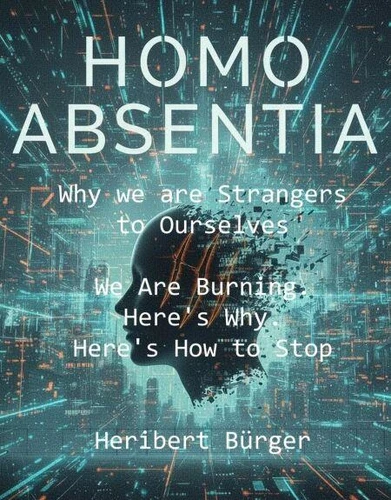
Homo Absentia
Par :Formats :
Disponible dans votre compte client Decitre ou Furet du Nord dès validation de votre commande. Le format ePub est :
- Compatible avec une lecture sur My Vivlio (smartphone, tablette, ordinateur)
- Compatible avec une lecture sur liseuses Vivlio
- Pour les liseuses autres que Vivlio, vous devez utiliser le logiciel Adobe Digital Edition. Non compatible avec la lecture sur les liseuses Kindle, Remarkable et Sony
 , qui est-ce ?
Notre partenaire de plateforme de lecture numérique où vous retrouverez l'ensemble de vos ebooks gratuitement
Pour en savoir plus sur nos ebooks, consultez notre aide en ligne ici
C'est si simple ! Lisez votre ebook avec l'app Vivlio sur votre tablette, mobile ou ordinateur :

- FormatePub
- ISBN8233313691
- EAN9798233313691
- Date de parution16/01/2026
- Protection num.pas de protection
- Infos supplémentairesepub
- ÉditeurLinda Balsamo
Résumé
Why are we so lonely? Why is our attention shattered? Why does modern life feel like running software from 2025 on hardware from 50, 000 BC?Homo Absentia is a radical diagnosis of the modern condition. We are not sick. We are not weak. We are simply the wrong creatures in the wrong world. Heribert Bürger, a German author and thinker, takes you on a journey through the three great wounds of modernity:The First Wound: The Enclosure.
When we lost the village and gained the isolated self-psychologically homeless, desperate for belonging. The Second Wound: Industrialization. When our work became abstract, our labor was stolen, and we became strangers in our own doing. The Third Wound: Digitalization. When algorithms learned to exploit our tribal instincts, fragmenting our identities across a dozen platforms, leaving us coherent nowhere.
But the book doesn't stop at diagnosis. It goes deeper. Drawing on epigenetics, evolutionary psychology, and systems thinking, Bürger reveals how our grandparents' traumas are written into our genes, how our brains are preprogrammed for alarm, and why we are so vulnerable to demagogues and consumption. Then comes the radical part: the path forward. Not a return to the past, but a redesign of civilization itself.
Principles like the return to the Dunbar number, the reintegration of person and function, new rituals, and the professionalization of power. The book concludes with 17 possible futures-from dystopian nightmares to utopian possibilities-showing where we are headed if we don't change course. This is not self-help. This is civilizational diagnosis. This is urgent. This is necessary.
When we lost the village and gained the isolated self-psychologically homeless, desperate for belonging. The Second Wound: Industrialization. When our work became abstract, our labor was stolen, and we became strangers in our own doing. The Third Wound: Digitalization. When algorithms learned to exploit our tribal instincts, fragmenting our identities across a dozen platforms, leaving us coherent nowhere.
But the book doesn't stop at diagnosis. It goes deeper. Drawing on epigenetics, evolutionary psychology, and systems thinking, Bürger reveals how our grandparents' traumas are written into our genes, how our brains are preprogrammed for alarm, and why we are so vulnerable to demagogues and consumption. Then comes the radical part: the path forward. Not a return to the past, but a redesign of civilization itself.
Principles like the return to the Dunbar number, the reintegration of person and function, new rituals, and the professionalization of power. The book concludes with 17 possible futures-from dystopian nightmares to utopian possibilities-showing where we are headed if we don't change course. This is not self-help. This is civilizational diagnosis. This is urgent. This is necessary.