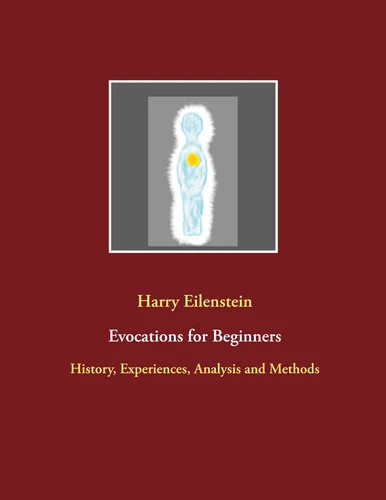
Evocations for Beginners. History, Experiences, Analysis and Methods
Par :Formats :
Disponible dans votre compte client Decitre ou Furet du Nord dès validation de votre commande. Le format ePub est :
- Compatible avec une lecture sur My Vivlio (smartphone, tablette, ordinateur)
- Compatible avec une lecture sur liseuses Vivlio
- Pour les liseuses autres que Vivlio, vous devez utiliser le logiciel Adobe Digital Edition. Non compatible avec la lecture sur les liseuses Kindle, Remarkable et Sony
 , qui est-ce ?
Notre partenaire de plateforme de lecture numérique où vous retrouverez l'ensemble de vos ebooks gratuitement
Pour en savoir plus sur nos ebooks, consultez notre aide en ligne ici
C'est si simple ! Lisez votre ebook avec l'app Vivlio sur votre tablette, mobile ou ordinateur :

- Nombre de pages60
- FormatePub
- ISBN978-3-7534-3730-9
- EAN9783753437309
- Date de parution17/05/2021
- Protection num.Digital Watermarking
- Taille131 Ko
- Infos supplémentairesepub
- ÉditeurBooks on Demand
Résumé
Summoning spirits (evocation) does not have the best reputation ... as long as they are not called "apparitions of Mary", "cult of the dead", "invocations of gods", "spiritualism" or "family constellations" ...
What is so scary about contact with spirits? In dream journeys one also meets all kinds of spirits - and poltergeists always come quite unasked. The problem is mainly the fear of death, of the spirits of the dead.
This has not always been the case - close contact with the dead was first demonized by the Christian missionaries: They put the one God Father in place of the deceased physical father of every human being - and formed the devil from the archetype of the ancestor spirit.
There is hardly an early culture in which spirits were not conjured up.
Examples of this can be found in the Neolithic Age, in Egypt, Sumer, among the Hittites, the Romans, in Africa, in the Old and New Testaments, among the Germanic peoples, the Celts, in Islam, and so on. There is a great variety in the methods of evocation, in the reasons for them, in their procedure and in their place in the culture - but the basic principle is very simple.
Examples of this can be found in the Neolithic Age, in Egypt, Sumer, among the Hittites, the Romans, in Africa, in the Old and New Testaments, among the Germanic peoples, the Celts, in Islam, and so on. There is a great variety in the methods of evocation, in the reasons for them, in their procedure and in their place in the culture - but the basic principle is very simple.
A propos de Harry Eilenstein



6,99 €







6,99 €