
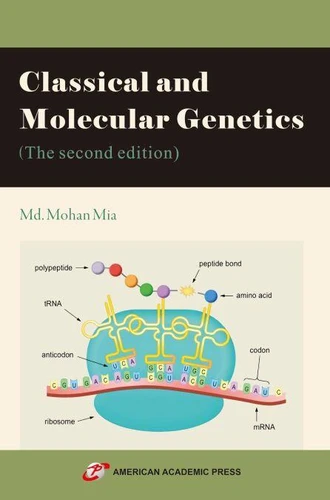
Classical and Molecular Genetics (The second edition)
Par :Formats :
Disponible dans votre compte client Decitre ou Furet du Nord dès validation de votre commande. Le format ePub est :
- Compatible avec une lecture sur My Vivlio (smartphone, tablette, ordinateur)
- Compatible avec une lecture sur liseuses Vivlio
- Pour les liseuses autres que Vivlio, vous devez utiliser le logiciel Adobe Digital Edition. Non compatible avec la lecture sur les liseuses Kindle, Remarkable et Sony
 , qui est-ce ?
Notre partenaire de plateforme de lecture numérique où vous retrouverez l'ensemble de vos ebooks gratuitement
Pour en savoir plus sur nos ebooks, consultez notre aide en ligne ici
C'est si simple ! Lisez votre ebook avec l'app Vivlio sur votre tablette, mobile ou ordinateur :

- FormatePub
- ISBN8232718282
- EAN9798232718282
- Date de parution12/11/2025
- Protection num.pas de protection
- Infos supplémentairesepub
- ÉditeurDraft2Digital
Résumé
Genes are viewed both as units of heredity in the classical sense and as segments of DNA with specific molecular functions in the modern perspective. The main focus of the manuscript is to demonstrate how the principles of classical genetics integrate with the molecular understanding of genes, DNA, and heredity. It explains the principles of heredity and gene function, combining traditional Mendelian concepts with modern molecular biology to show how genetic information is inherited, expressed, and regulated.
The core learning objectives include understanding the foundations of classical genetics, recognizing the physical nature of genes as DNA sequences, linking classical principles to molecular mechanisms, explaining genetic processes at the molecular level, and connecting genetics with modern applications. The author presents these fundamentals with up-to-date examples, while deliberately avoiding exhaustive detail.
The core learning objectives include understanding the foundations of classical genetics, recognizing the physical nature of genes as DNA sequences, linking classical principles to molecular mechanisms, explaining genetic processes at the molecular level, and connecting genetics with modern applications. The author presents these fundamentals with up-to-date examples, while deliberately avoiding exhaustive detail.