
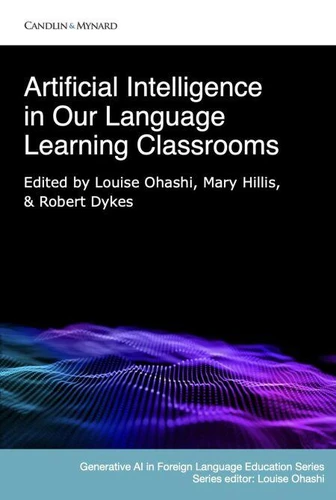
Artificial Intelligence in Our Language Learning Classrooms. Generative AI and Foreign Language Education, #1
Par : , ,Formats :
Disponible dans votre compte client Decitre ou Furet du Nord dès validation de votre commande. Le format ePub est :
- Compatible avec une lecture sur My Vivlio (smartphone, tablette, ordinateur)
- Compatible avec une lecture sur liseuses Vivlio
- Pour les liseuses autres que Vivlio, vous devez utiliser le logiciel Adobe Digital Edition. Non compatible avec la lecture sur les liseuses Kindle, Remarkable et Sony
 , qui est-ce ?
Notre partenaire de plateforme de lecture numérique où vous retrouverez l'ensemble de vos ebooks gratuitement
Pour en savoir plus sur nos ebooks, consultez notre aide en ligne ici
C'est si simple ! Lisez votre ebook avec l'app Vivlio sur votre tablette, mobile ou ordinateur :

- FormatePub
- ISBN8232636036
- EAN9798232636036
- Date de parution21/11/2025
- Protection num.pas de protection
- Infos supplémentairesepub
- ÉditeurDraft2Digital
Résumé
Generative artificial intelligence (GenAI) is transforming education, and language classrooms are no exception. This groundbreaking volume brings together international scholars and practitioners to examine how AI is reshaping the teaching and learning of additional languages. Edited by Louise Ohashi, Mary Hillis, and Robert Dykes, Artificial Intelligence in Our Language Learning Classrooms offers both theoretical perspectives and practical applications for educators navigating the new AI landscape.
Divided into two parts, the book first explores how GenAI supports core language skills-including speaking, writing, reading, and pragmatics-through conversational AI, chatbots, and text generation tools. Contributors examine how these technologies can enhance learner autonomy, motivation, and creativity when implemented responsibly. The second part turns to broader questions of ethics, emotion, and professional development.
Topics include AI literacy, academic integrity, bias and equity, environmental sustainability, and teacher-led inquiry into AI-enhanced pedagogy. Throughout the book, readers are encouraged to view AI not as a threat to language education but as a collaborative partner that, when thoughtfully integrated, can enrich human interaction, critical thinking, and creativity in the classroom. The editors and authors combine research-based insights with practical advice to help teachers make informed decisions about AI use, design meaningful classroom activities, and prepare students for an increasingly AI-mediated world.
Artificial Intelligence in Our Language Learning Classrooms is essential reading for language teachers, teacher educators, applied linguists, and institutional leaders seeking to understand and shape the future of language education in the age of generative AI.
Divided into two parts, the book first explores how GenAI supports core language skills-including speaking, writing, reading, and pragmatics-through conversational AI, chatbots, and text generation tools. Contributors examine how these technologies can enhance learner autonomy, motivation, and creativity when implemented responsibly. The second part turns to broader questions of ethics, emotion, and professional development.
Topics include AI literacy, academic integrity, bias and equity, environmental sustainability, and teacher-led inquiry into AI-enhanced pedagogy. Throughout the book, readers are encouraged to view AI not as a threat to language education but as a collaborative partner that, when thoughtfully integrated, can enrich human interaction, critical thinking, and creativity in the classroom. The editors and authors combine research-based insights with practical advice to help teachers make informed decisions about AI use, design meaningful classroom activities, and prepare students for an increasingly AI-mediated world.
Artificial Intelligence in Our Language Learning Classrooms is essential reading for language teachers, teacher educators, applied linguists, and institutional leaders seeking to understand and shape the future of language education in the age of generative AI.
Generative artificial intelligence (GenAI) is transforming education, and language classrooms are no exception. This groundbreaking volume brings together international scholars and practitioners to examine how AI is reshaping the teaching and learning of additional languages. Edited by Louise Ohashi, Mary Hillis, and Robert Dykes, Artificial Intelligence in Our Language Learning Classrooms offers both theoretical perspectives and practical applications for educators navigating the new AI landscape.
Divided into two parts, the book first explores how GenAI supports core language skills-including speaking, writing, reading, and pragmatics-through conversational AI, chatbots, and text generation tools. Contributors examine how these technologies can enhance learner autonomy, motivation, and creativity when implemented responsibly. The second part turns to broader questions of ethics, emotion, and professional development.
Topics include AI literacy, academic integrity, bias and equity, environmental sustainability, and teacher-led inquiry into AI-enhanced pedagogy. Throughout the book, readers are encouraged to view AI not as a threat to language education but as a collaborative partner that, when thoughtfully integrated, can enrich human interaction, critical thinking, and creativity in the classroom. The editors and authors combine research-based insights with practical advice to help teachers make informed decisions about AI use, design meaningful classroom activities, and prepare students for an increasingly AI-mediated world.
Artificial Intelligence in Our Language Learning Classrooms is essential reading for language teachers, teacher educators, applied linguists, and institutional leaders seeking to understand and shape the future of language education in the age of generative AI.
Divided into two parts, the book first explores how GenAI supports core language skills-including speaking, writing, reading, and pragmatics-through conversational AI, chatbots, and text generation tools. Contributors examine how these technologies can enhance learner autonomy, motivation, and creativity when implemented responsibly. The second part turns to broader questions of ethics, emotion, and professional development.
Topics include AI literacy, academic integrity, bias and equity, environmental sustainability, and teacher-led inquiry into AI-enhanced pedagogy. Throughout the book, readers are encouraged to view AI not as a threat to language education but as a collaborative partner that, when thoughtfully integrated, can enrich human interaction, critical thinking, and creativity in the classroom. The editors and authors combine research-based insights with practical advice to help teachers make informed decisions about AI use, design meaningful classroom activities, and prepare students for an increasingly AI-mediated world.
Artificial Intelligence in Our Language Learning Classrooms is essential reading for language teachers, teacher educators, applied linguists, and institutional leaders seeking to understand and shape the future of language education in the age of generative AI.