
Dernière sortie
The Hidden Rules of Catastrophe: How Invisible Systems Shape Sudden Failure
Catastrophe is usually described as sudden and unexpected. Systems fail overnight. Everything appears fine until it isn't. The Hidden Rules of Catastrophe challenges this assumption by showing that collapse is rarely abrupt in reality, even when it feels that way to those experiencing it. Across natural, technological, economic, and institutional systems, failure emerges from long periods of accumulation that operate below the threshold of everyday attention.
Stress builds slowly, stability conceals fragility, and warning signals appear in forms that are easy to overlook. When collapse finally occurs, it is experienced as an event rather than recognized as the conclusion of a process already well underway. This book examines why modern societies repeatedly misinterpret failure. It explores how scale distorts perception, how efficiency trades resilience for performance, and how expertise and models can create confidence just as systems move closer to their limits.
Drawing on examples from geology, infrastructure, finance, governance, and ecology, it reveals structural patterns that recur across very different domains. Rather than offering predictions or prescriptions, the book provides a way of seeing. It shifts attention from dramatic triggers to underlying conditions, from moments to trajectories, and from certainty to limits. In doing so, it reframes catastrophe not as anomaly or surprise, but as information about how complex systems behave under sustained pressure.
Written for a general adult audience, The Hidden Rules of Catastrophe offers a clear, measured exploration of why breakdown so often feels sudden-and why it rarely is.
Stress builds slowly, stability conceals fragility, and warning signals appear in forms that are easy to overlook. When collapse finally occurs, it is experienced as an event rather than recognized as the conclusion of a process already well underway. This book examines why modern societies repeatedly misinterpret failure. It explores how scale distorts perception, how efficiency trades resilience for performance, and how expertise and models can create confidence just as systems move closer to their limits.
Drawing on examples from geology, infrastructure, finance, governance, and ecology, it reveals structural patterns that recur across very different domains. Rather than offering predictions or prescriptions, the book provides a way of seeing. It shifts attention from dramatic triggers to underlying conditions, from moments to trajectories, and from certainty to limits. In doing so, it reframes catastrophe not as anomaly or surprise, but as information about how complex systems behave under sustained pressure.
Written for a general adult audience, The Hidden Rules of Catastrophe offers a clear, measured exploration of why breakdown so often feels sudden-and why it rarely is.
Les livres de John Pritchett







The Signature of Breath
E-book
3,49 €

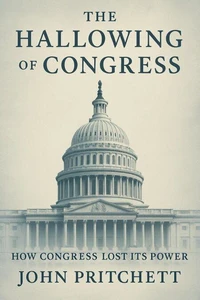




Deep Earth
E-book
3,49 €
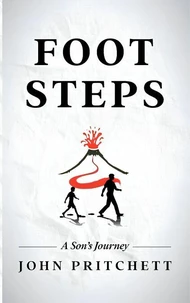
3,49 €
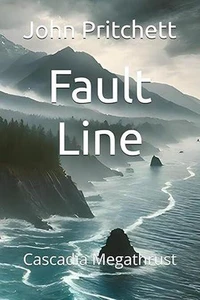
3,49 €

3,49 €

3,49 €

The Narrator Within
E-book
3,49 €

3,49 €

3,49 €