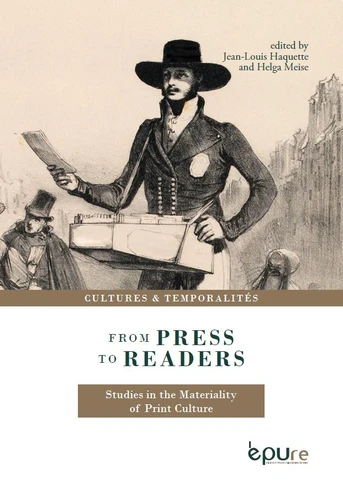
From Press to Readers. Studies in the Materiality of Print Culture
Par : ,Formats :
- Paiement en ligne :
- Livraison à domicile ou en point Mondial Relay estimée à partir du 1 avrilCet article sera commandé chez un fournisseur et vous sera envoyé 5 jours après la date de votre commande.
- Retrait Click and Collect en magasin gratuit
- Livraison à domicile ou en point Mondial Relay estimée à partir du 1 avril
- Réservation en ligne avec paiement en magasin :
- Indisponible pour réserver et payer en magasin
- Nombre de pages182
- FormatGrand Format
- PrésentationRelié
- Poids0.25 kg
- Dimensions14,8 cm × 21,0 cm × 1,7 cm
- ISBN978-2-37496-217-7
- EAN9782374962177
- Date de parution16/05/2024
- CollectionCultures & Temporalités
- ÉditeurPresses Universitaires Reims
Résumé
The seven articles in this volume, written by French and German specialists in book history, address various aspe&s of the materiality of print culture, examining both the processes of book production and the paths of book circulation. They explore notions of composition, collection and circulation of texts and images, from manuscript to books designed for specific readers. They are based on a variety of sources from archive documents to the study of specific manuscript or printed copies.
The perspe&ive is transnational, taking Gutenberg's Europe as a space for the circulation of print, and concerns early modernity, from the fifteenth to the eighteenth centuries.
The perspe&ive is transnational, taking Gutenberg's Europe as a space for the circulation of print, and concerns early modernity, from the fifteenth to the eighteenth centuries.
L'éditeur en parle
Sept spécialistes français et allemands de l'histoire du livre éclairent dans ce recueil divers aspects de la matérialité de la culture de l'imprimé. En envisageant les processus de fabrication et de circulation des livres à partir de sources variées (documents d'archives, inventaires, catalogues, collections de bibliophiles, exemplaires particuliers), ils explorent les notions de composition, de collection, de réception, ainsi que les spécificités des formes manuscrite et imprimée.
La perspective transnationale envisage l'Europe de Gutenberg comme espace de circulation de l'imprimé et porte sur la première modernité (XVe-XVIIIe siècles). Les contributions sont en anglais.
La perspective transnationale envisage l'Europe de Gutenberg comme espace de circulation de l'imprimé et porte sur la première modernité (XVe-XVIIIe siècles). Les contributions sont en anglais.
A propos de Helga Meise



Vous aimerez aussi