

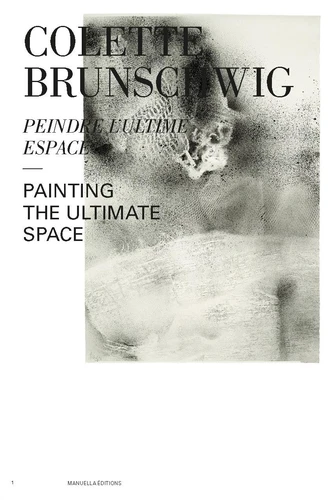
Colette Brunschwig. Peindre l'ultime espace
Par : , , ,Formats :
- Paiement en ligne :
- Livraison à domicile ou en point Mondial Relay estimée à partir du 25 marsCet article sera commandé chez un fournisseur et vous sera envoyé 6 jours après la date de votre commande.
- Retrait Click and Collect en magasin gratuit
- Livraison à domicile ou en point Mondial Relay estimée à partir du 25 mars
- Réservation en ligne avec paiement en magasin :
- Indisponible pour réserver et payer en magasin
- Nombre de pages288
- FormatBeau Livre
- Poids1.234 kg
- Dimensions21,8 cm × 32,6 cm × 2,5 cm
- ISBN978-2-490505-00-5
- EAN9782490505005
- Date de parution05/03/2021
- ÉditeurManuella Editions
Résumé
Colette Brunschwig est une peintre du XXe siècle, dont elle interroge de façon singulière la modernité artistique occidentale, et les traumas historiques que furent la Shoah et Hiroshima. Dans la proximité philosophique d'Emmanuel Levinas, l'artiste, proche du philologue Jean Bollack, joint ses recherches picturales liées aux abstractions des années 1950 à l'étude des traditions exégétiques talmudiques, avant d'y associer, à la fin des années 1960, l'enseignement des peintres lettrés chinois des XIIe et XIIIe siècles.
Assumant une double généalogie avec Claude Monet et Kasimir Malevitch, Colette Brunschwig n'a cessé d'explorer un espace dynamique, traversé d'un souffle intérieur d'expansion et de compression ; espace qu'elle rend patiemment disponible pour recommencer la peinture après l'anéantissement, et y inscrire les strates réflexives et sensibles d'une revue des formes. Cette première monographie se veut un outil olivet de connaissance.
Elle réunit donc une large iconographie de l'oeuvre peint de Colette Brunschwig, des archives personnelles, des photographies d'expositions, des essais critiques comme autant d'entrées possibles dans le geste pictural et la démarche intellectuelle, la correspondance de l'artiste avec diverses figures célèbres de la scène artistique et littéraire française de l'après-guerre, et ses propres textes, nés de la réflexion de son rapport à l'art moderne et aux transformations technologiques de son temps.
Assumant une double généalogie avec Claude Monet et Kasimir Malevitch, Colette Brunschwig n'a cessé d'explorer un espace dynamique, traversé d'un souffle intérieur d'expansion et de compression ; espace qu'elle rend patiemment disponible pour recommencer la peinture après l'anéantissement, et y inscrire les strates réflexives et sensibles d'une revue des formes. Cette première monographie se veut un outil olivet de connaissance.
Elle réunit donc une large iconographie de l'oeuvre peint de Colette Brunschwig, des archives personnelles, des photographies d'expositions, des essais critiques comme autant d'entrées possibles dans le geste pictural et la démarche intellectuelle, la correspondance de l'artiste avec diverses figures célèbres de la scène artistique et littéraire française de l'après-guerre, et ses propres textes, nés de la réflexion de son rapport à l'art moderne et aux transformations technologiques de son temps.
L'éditeur en parle
Colette Brunschwig is a painter of the twentieth century, and she interrogates both Western artistic modernity and the historic traumas of the Shoah and of Hiroshima in a unique way. The artist, who has a strong sense of philosophical kinship with Emmanuel Levinas and was close to the philologist Jean Bollack, combined her painterly investigations linked to 1950s abstract art with the study of Talmudic exegetical traditions and, in the late 1960s, lessons learned from the Chinese Literati painters of the twelfth and thirteenth centuries.
Tracing her twofold artistic lineage back to Claude Monet and Kazimir Malevich, Calette Brunschwig has constantly explored a dynamic space across which the inner breath of expansion and compression blows a space she patiently makes available in order to continue painting when all has been annihilated and to inscribe within her work the reflexive, sensitive strata of newly living forms. This first monograph is intended to be an open tool for knowledge.
It thus includes a large number of reproductions of Colette Brunschwig's paintings, extracts from her personal archives, photographs of exhibitions and critical essays, all forming possible windows into the artist's painterly techniques and intellectual approaches. It also includes her correspondence with famous members of the artistic and literary scene in post-war France and writings in which she reflects upon her relationship with modern art and the technological transformations of her time.
Tracing her twofold artistic lineage back to Claude Monet and Kazimir Malevich, Calette Brunschwig has constantly explored a dynamic space across which the inner breath of expansion and compression blows a space she patiently makes available in order to continue painting when all has been annihilated and to inscribe within her work the reflexive, sensitive strata of newly living forms. This first monograph is intended to be an open tool for knowledge.
It thus includes a large number of reproductions of Colette Brunschwig's paintings, extracts from her personal archives, photographs of exhibitions and critical essays, all forming possible windows into the artist's painterly techniques and intellectual approaches. It also includes her correspondence with famous members of the artistic and literary scene in post-war France and writings in which she reflects upon her relationship with modern art and the technological transformations of her time.
A propos de Marjorie Micucci

Brouhaha. Jean-Christophe Norman
Grand Format
30,00 €
9,00 €
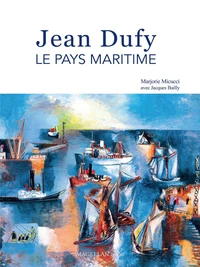
Jean Dufy, le pays maritime
Grand Format
35,00 €
Vous aimerez aussi
Corot. Sensible et poétique
Grand Format
14,95 €